
Dragon Delivers New Solar Arrays and a Fresh Batch of Space-Station Science
Published October 17, 2026
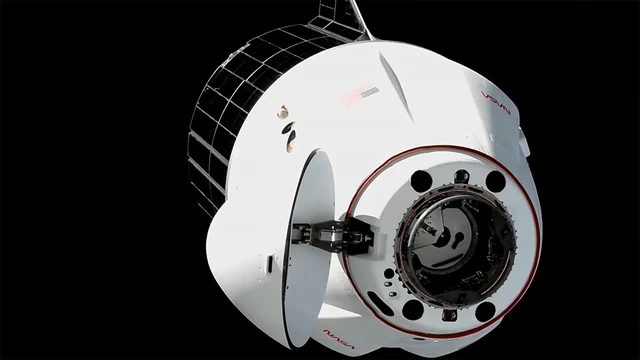
The actual CRS-35 approach on October 15. NASA subsequently confirmed docking at the Harmony module's space-facing port.
CRS-35 docked on October 15 with more than 6,300 pounds of cargo, including roll-out solar arrays and experiments involving tissues and materials.
A cargo delivery to the space station is also a delivery of future electrical power and future experiments. The latest Dragon brought all three together.
NASA confirmed that SpaceX's CRS-35 spacecraft docked with the International Space Station at 11 a.m. Eastern on October 15, reaching the space-facing port of the Harmony module with more than 6,300 pounds of supplies and equipment. That is a completed arrival, not just the docking forecast issued before launch. NASA's docking report.
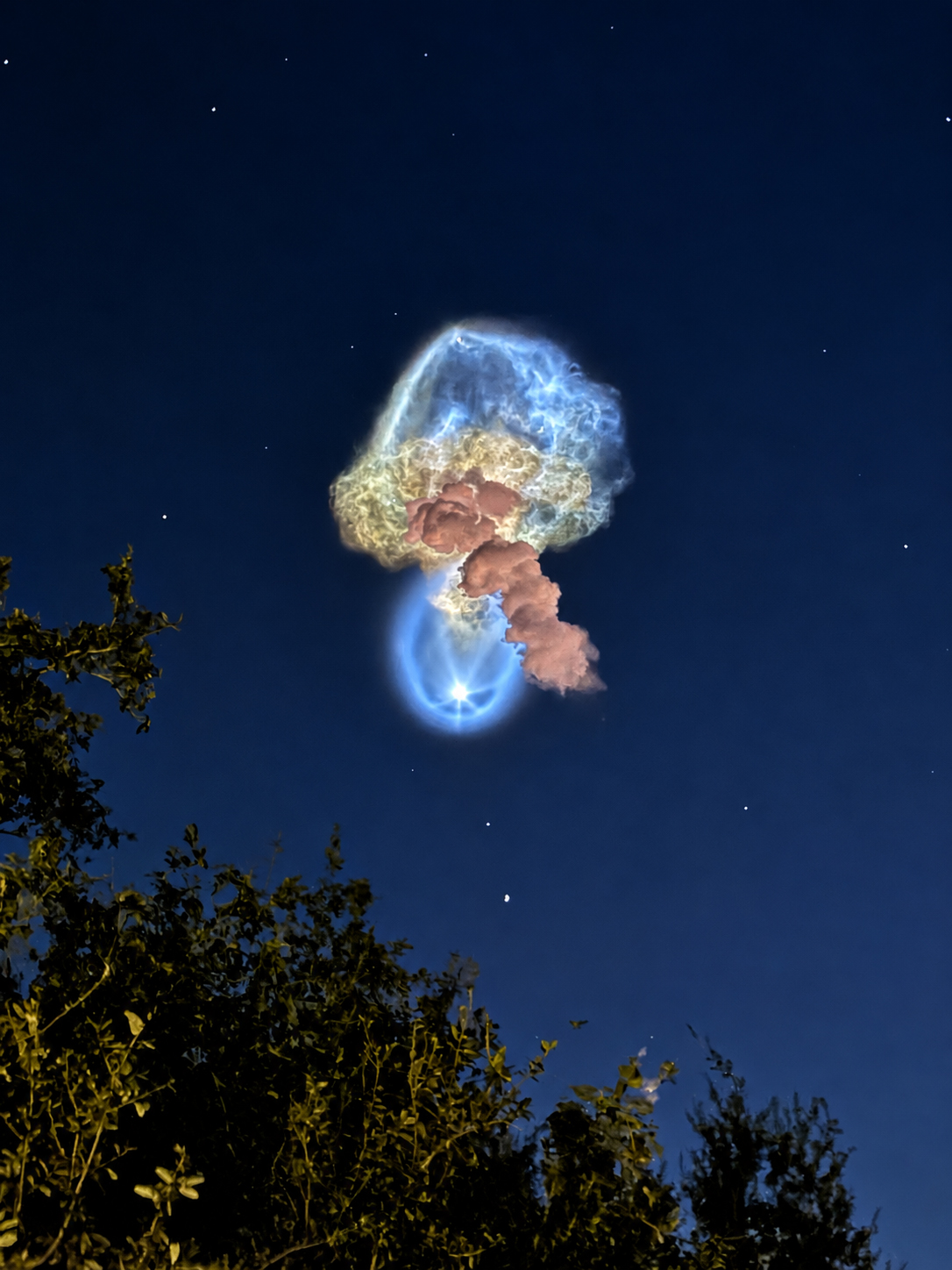
Dragon had launched on a Falcon 9 from Cape Canaveral on October 13. The two-day sequence illustrates a useful distinction: reaching orbit and reaching the station are different jobs. The rocket performs the initial delivery, while Dragon handles the subsequent journey and rendezvous. NASA's liftoff report.
The delivery serves the Expedition 75 crew. Food and operational supplies share the manifest with the research equipment and power hardware that receive much of the attention.
More Power Arrives as Packed Hardware
Among the cargo was the final pair of International Space Station Roll-Out Solar Arrays. NASA says the arrays will augment the station's electrical system and support research, operations and its eventual safe, controlled deorbit.
Delivery does not mean installation. The agency described spacewalks planned for later in the fall to install the hardware. The new arrays therefore belong to the next stage of work rather than an already completed power upgrade. NASA's cargo overview.
It is an easily overlooked part of a science launch. Instruments need power, but so do the systems that keep a crewed laboratory operating. Equipment that supports the laboratory can make later research possible without itself being the experiment featured in the most striking headline.
The Research Is More Specific Than "Experiments in Space"
NASA's preview lists hardware for manufacturing artificial retinas in microgravity, three-dimensional heart-tissue models, studies of a new type of glass, and brain organoids. Those are research systems and objectives, not reports that the flight has produced a proven treatment.
The range is part of the appeal. A materials experiment and a tissue model may share a ride while pursuing very different measurements. A launch manifest is an inventory of opportunities; the eventual results depend on what happens during the work and how the data are interpreted.
Microgravity also is not a magic quality label. The meaningful question is what a particular experiment can learn or do under those conditions that differs from its ground-based comparison. The presence of a medical word in the cargo list should not be turned into a claim about what patients can receive now.
For a maker-minded reader, this is an interesting packaging problem at a very unusual destination. Research hardware must arrive in a form that the crew can handle and use within an operating laboratory. An instrument's central scientific idea is only one part of getting that experiment into service.
The Work Begins After the Arrival
The docking confirmation resolves one uncertainty left in the earlier research package. It does not resolve the later results of every investigation, or the completion of the array-installation spacewalks.
Those are the next developments to follow: unloading and activating hardware, installing the arrays, and eventually seeing findings from the experiments. Keeping those events separate makes it easier to recognize a real result when one arrives.
What should we unpack next, the roll-out arrays or one of the materials experiments? Add your questions in the comments below.
Comments
Member comments are temporarily unavailable.
Log in to join the discussion.