
This Falcon 9 Booster Just Completed Its Twentieth Landing
Published October 17, 2026
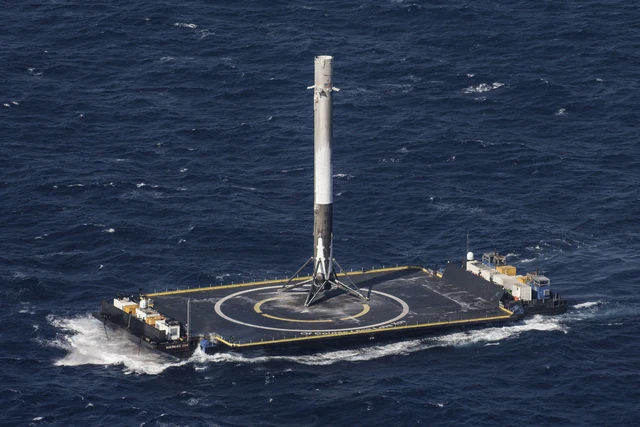
Archival CRS-8 recovery photograph from 2016, not B1088's October 2026 landing. It illustrates sea-based booster recovery.
B1088 returned to a Pacific drone ship after launching 27 Starlink satellites. The milestone belongs to this booster, not to every Falcon 9.
Twenty landings is a substantial history for a piece of rocket hardware. Falcon 9 first stage B1088 reached that milestone after sending another batch of Starlink satellites toward orbit.
The launch carried 27 satellites from Vandenberg Space Force Base at 00:28 UTC on October 13. In the United States it was still October 12. The booster returned to the Pacific drone ship Of Course I Still Love You, completing its twentieth successful recovery, according to the contemporaneous mission report. Satellite deployment followed roughly 62 minutes after liftoff. Mission report.
Twenty for This Booster
The number belongs to B1088. It is not the twentieth landing in the history of Falcon 9, and this report does not establish a new fleet-wide reuse record.
That distinction is the story's useful unit of scale. A launch vehicle family can have a long operational history while individual first stages have very different histories. Counting returns for a particular stage tells us something more specific than counting flights of the rocket type.
It also avoids assigning a flight history to the whole stack. The recovered first stage is one part of the launch vehicle. The upper stage and payload continue on a different path after separation; the rocket does not return intact with its satellites still aboard.
The Landing and the Delivery Are Separate
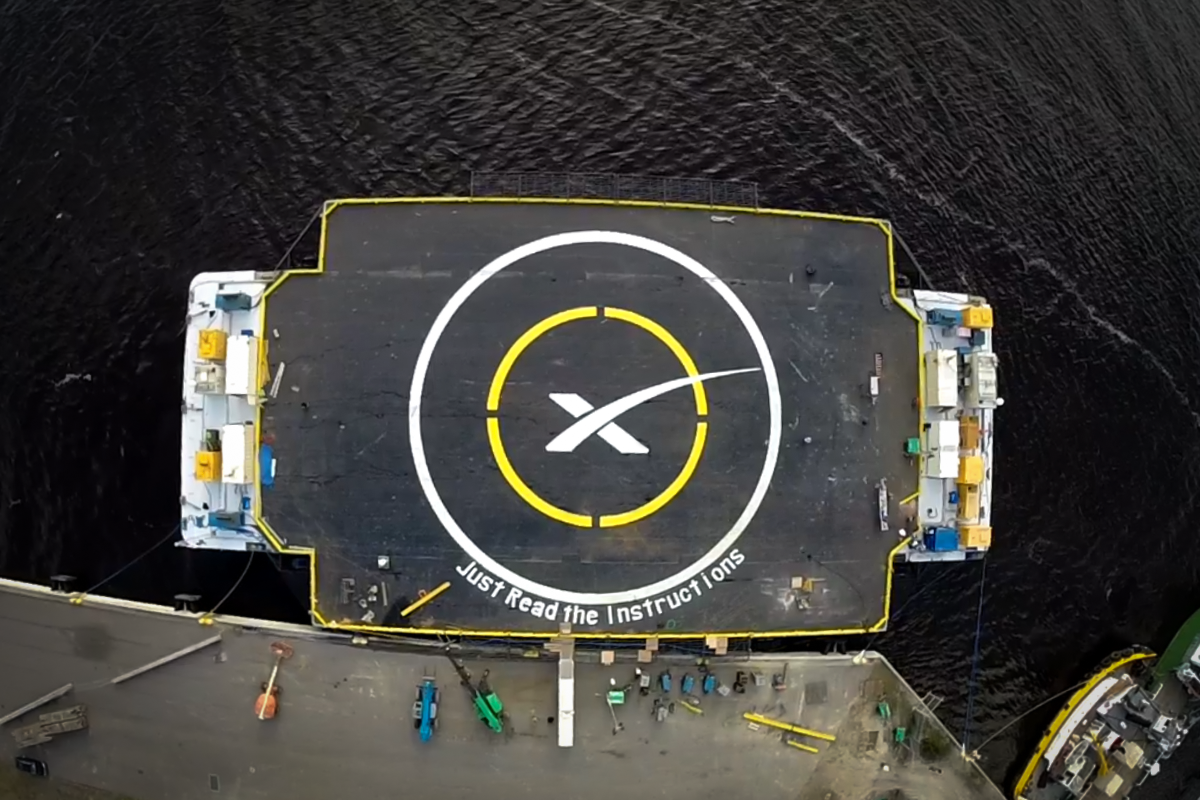
Sea-based recovery makes the first stage's destination visibly different from the satellites' destination. One piece of hardware is aiming for a floating platform while the payload continues toward deployment.
A successful landing is therefore not, by itself, proof of successful satellite deployment. This mission report records both events. Keeping them separate is useful when watching a fast-cut video that jumps from liftoff straight to a returning booster.
The photographs here are clearly dated reference images. The linked report contains coverage of the current mission; the 2016 CRS-8 photograph is not being passed off as B1088.
The Engineering Question After the Spectacle
A return is also an opportunity to inspect hardware. The public landing count does not disclose every maintenance action between flights, so it should not be converted into a made-up refurbishment cost or a claim that nothing needed replacing.
What it does establish is repeated recovery of a specific stage. That is a concrete milestone without pretending to know the private inspection record behind it.
Which part of rocket reuse would you like explained next, the return flight or what can be learned from recovered hardware? Leave your questions in the comments below.
Comments
Member comments are temporarily unavailable.
Log in to join the discussion.