
Five Days After an Abort, Falcon 9 Delivers 21 Satellites and Lands
Published October 11, 2026
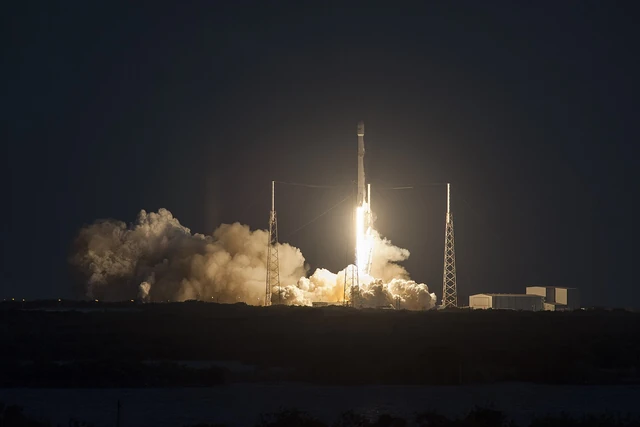
Archival SES-9 launch, March 2016. This is not a photograph of the October 10 SDA mission.
An October 10 launch from California added 21 satellites to a military data network. The booster came back to land after a scrubbed first attempt.
The first countdown stopped with less than a minute to go. Five days later, the rocket went up, the satellites reached orbit, and the booster came back down to California.
SpaceX's October 10 Falcon 9 launch delivered 21 Northrop Grumman-built satellites for the Space Development Agency's Tranche 1 Transport Layer. SDA confirmed the mission brought its on-orbit Tranche 1 total to 84 vehicles. These are military data-transport satellites, not another batch of Starlink broadband spacecraft. SDA's launch confirmation.
The distinction matters when watching the footage. Falcon 9 is the delivery vehicle; what is packed inside changes from mission to mission. Similar-looking nighttime launches can be building very different networks.
The Countdown That Stopped
The earlier attempt was on October 5. According to Spaceflight Now's mission report, an off-nominal condition involving the second stage triggered an automatic abort at T-minus 58 seconds. The eventual liftoff came at 12:39 a.m. Pacific on October 10 from Space Launch Complex 4 East at Vandenberg Space Force Base. Launch report and flight video.
An aborted countdown looks anticlimactic because the visible result is a rocket staying where it is. But a launch system also has to refuse to fly. A countdown is not simply a dramatic timer; it is a sequence of checks that can interrupt the sequence.
That does not mean every abort proves the same underlying problem, or that the public explanation contains the entire engineering diagnosis. Here, the reported second-stage condition explains the stop. It should not be inflated into a claim that a disaster was narrowly avoided.
Up to Orbit, Back to Land
The booster, B1103, was making its sixth flight. Spaceflight Now reports it landed at Vandenberg's Landing Zone 4 roughly seven and a half minutes after liftoff. The second stage continued the payload's journey while the first stage returned.
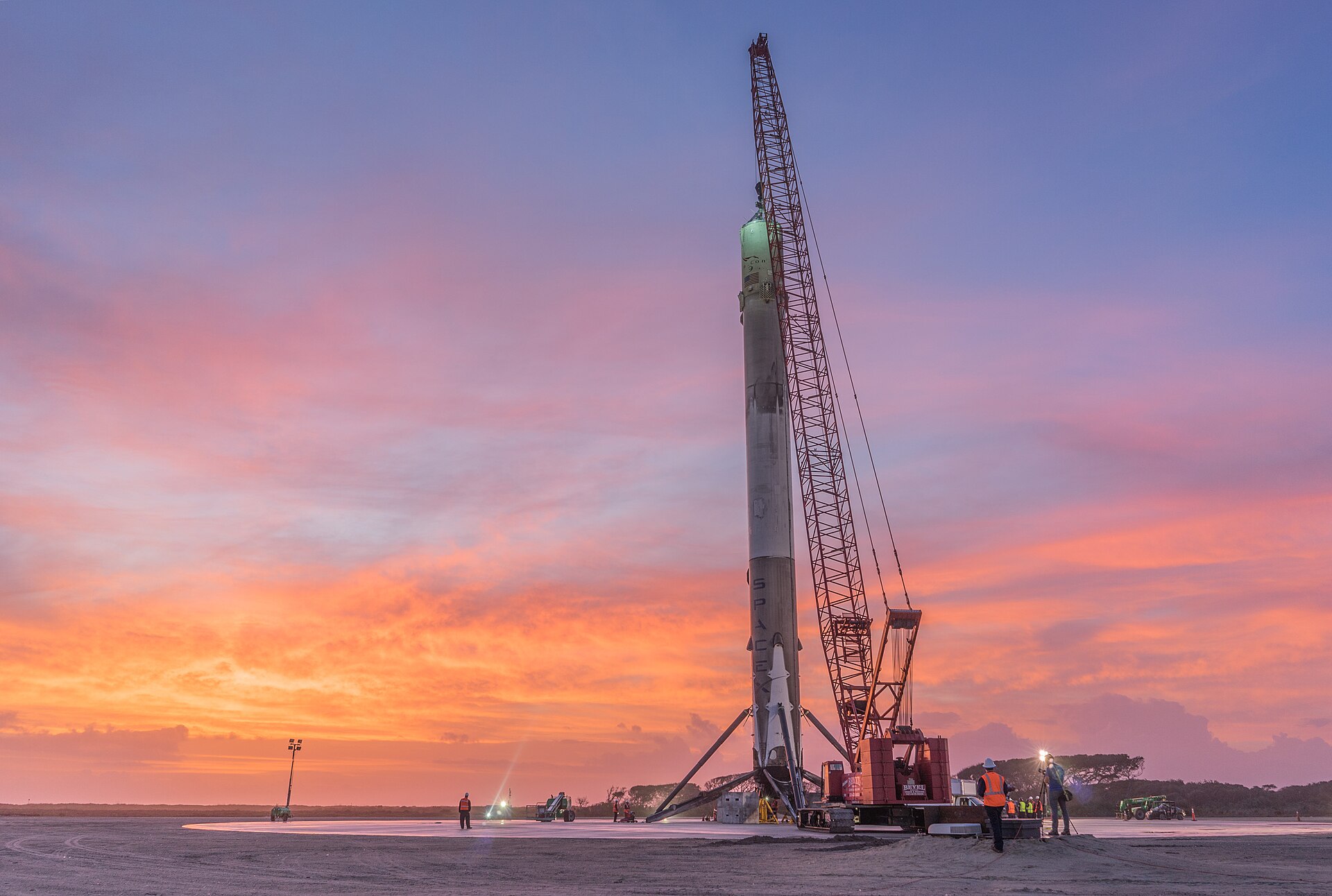
That separation is the part worth keeping in mind during a quick video montage. The landing is a spectacular result, but it is not the satellite deployment. A successful return and a successful delivery are distinct accomplishments within the same flight.
For the actual October 10 launch and landing, use the linked mission coverage rather than treating the archival photographs here as current-event evidence. Watching a real booster descend needs no invented explosions or synthetic spacecraft.
What the Satellites Are For
SDA describes the Transport Layer as a resilient network for moving military information, including links supporting missile tracking and beyond-line-of-sight connectivity. The agency's original Tranche 1 awards describe a distributed mesh rather than a single large satellite handling every connection. Tranche 1 architecture and original awards.
The network idea is interesting beyond the military application: distributing nodes changes where connections can be made and what happens when an individual node is unavailable. It also creates a coordination problem. Launching more hardware is only one part of making a complete system useful.
SDA says initial Tranche 1 warfighting capability is planned to begin in 2027. This flight therefore marks an addition to the architecture, not proof that every promised service is already operational.
That is the story beneath the midnight spectacle. The rocket finally flew after a scrub, its first stage returned, and another orbital plane joined a network still being assembled. Which part would you like unpacked next: the landing sequence or how satellites exchange data? Leave your questions in the comments below.
Comments
Member comments are temporarily unavailable.
Log in to join the discussion.