
A 45-Year-Old Soviet Satellite Has Broken Apart Again
Published October 11, 2026
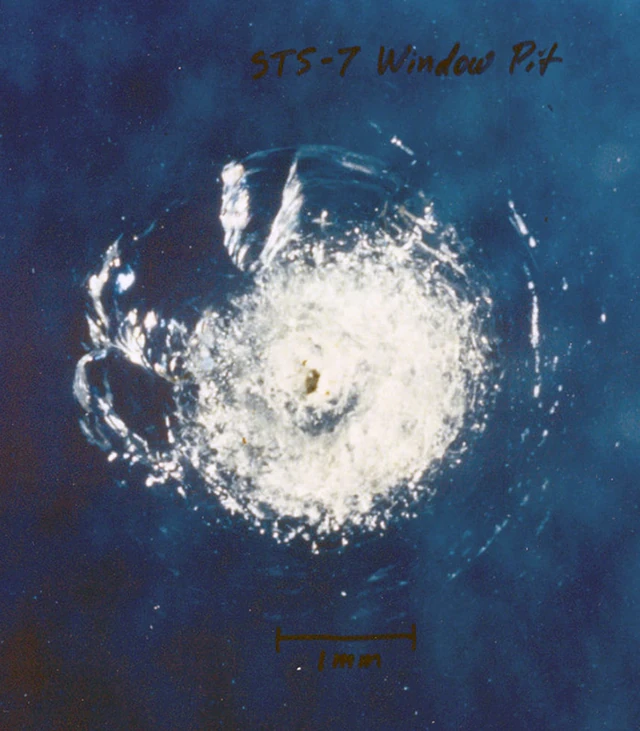
Historical STS-7 window impact damage, shown as debris-risk context. This was not caused by Meteor 2-7.
LeoLabs detected another debris-generating event near Meteor 2-7 on October 5. A satellite's useful life can end long before its orbital consequences.
A satellite can stop working and still make trouble for decades. Meteor 2-7 is a fresh example: the Soviet-era spacecraft, launched in 1981, experienced another debris-generating event on October 5.
LeoLabs says its Western Australia radar detected multiple objects near the satellite, followed by observations across its network confirming the event. Its preliminary estimate is tens of fragments, not a final inventory. The company identifies the parent object as Meteor 2-7, catalog number 12456. LeoLabs announcement, company update feed.
This is a catch-up report on an October 5 event. It is not a new breakup on publication day, and it is not the separate Kosmos 482 reentry story that circulated with some of the supplied image suggestions.
Again Is the Important Word
Meteor 2-7 had already fragmented in March 2004, according to Space.com's report. That history makes the latest event more interesting than a simple announcement that an old satellite is dead. An object can remain a source of new debris after its original mission, and even after an earlier fragmentation. Breakup history and reporting.
What caused this particular event has not been established in the material reviewed here. Do not read "broke apart" as confirmation of a collision. Nor does one event establish that an unstoppable chain reaction has begun.
The straightforward concern is enough: more separate objects require tracking and assessment. Saying less about an unknown cause makes the confirmed development clearer, not less significant.
Tiny Objects, Serious Consequences
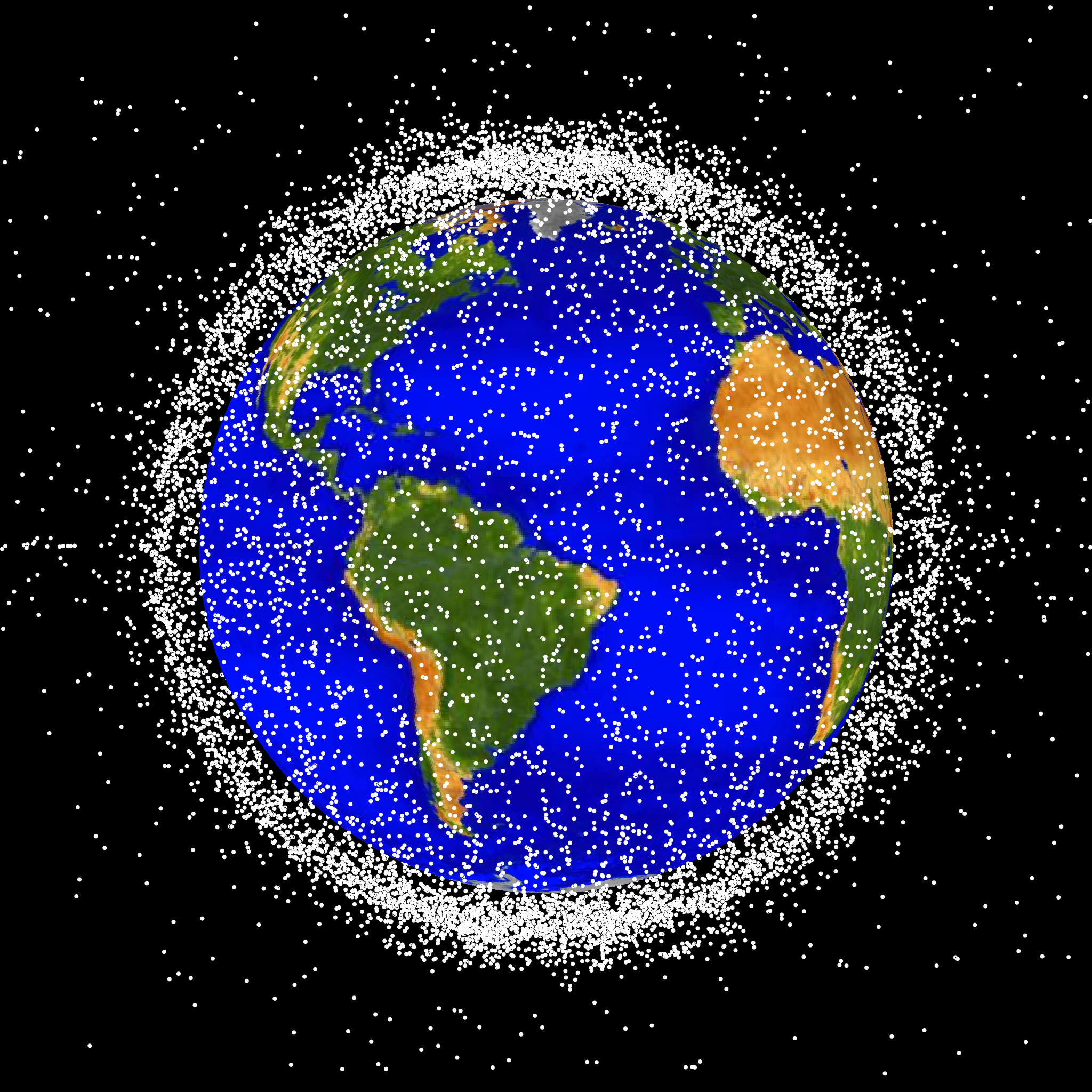
The lead image shows historical damage to a Shuttle window. It is included to make the consequence visible, not to suggest a fragment from this satellite struck a spacecraft. NASA's debris gallery contains both actual impact photographs and visualizations; those are different kinds of evidence. NASA orbital-debris gallery.
NASA distinguishes human-made orbital debris from naturally occurring micrometeoroids. Both can be hazards to vehicles in space. Meteor 2-7 belongs to the human-made side of that distinction; its name does not make its fragments meteorites. NASA's micrometeoroid and orbital-debris explainer.
The useful next update would be a better fragment inventory, information about the orbits, or a supported explanation of the cause. For now, the lesson is a lifecycle problem: ending a mission does not automatically end an object's presence or consequences in orbit.
Want a closer look at how radar distinguishes a parent satellite from nearby fragments? Leave your questions in the comments below.
Comments
Member comments are temporarily unavailable.
Log in to join the discussion.