
NASA's Nuclear-Electric Mars Plan Comes With Three Helicopters
Published October 11, 2026
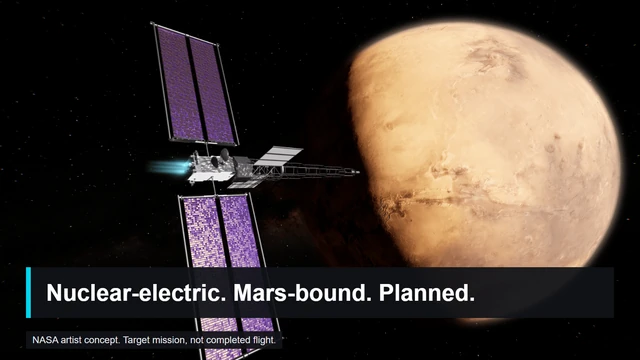
NASA mission concept artwork, not a photograph of a flown spacecraft.
Photo credit
sr1 hero.png
NASA · NASA media use guidelinesSource photograph cropped for a 16:9 layout, editorial headline added; image itself not regenerated. NASA artist concept. Target mission, not completed flight.
Resized for display; composition unchanged.
A new NASA-DOE agreement supports space nuclear development, while SR-1 Freedom targets a Mars trajectory and a three-helicopter payload.
A reactor-powered spacecraft headed toward Mars is a large enough idea on its own. NASA's current concept adds another visual hook: three helicopters released for exploration at the destination.
On October 8, NASA and the Department of Energy signed a memorandum establishing a framework for collaboration across space nuclear development, from research and fuel production to testing and operations. That is the new agreement. It is not a report that the spacecraft has launched or that a reactor has already operated on the Mars trajectory. NASA announcement.
The associated Space Reactor-1 Freedom mission concept targets launch in late 2028 and a Mars encounter in 2029. NASA describes a pathfinder for nuclear-electric propulsion carrying SkyFall, a payload of three helicopters evolved from Ingenuity's design heritage. Schedules and specifications remain plans, not accomplished milestones. Current mission description.
Nuclear Power Is Not the Same as a Nuclear Rocket
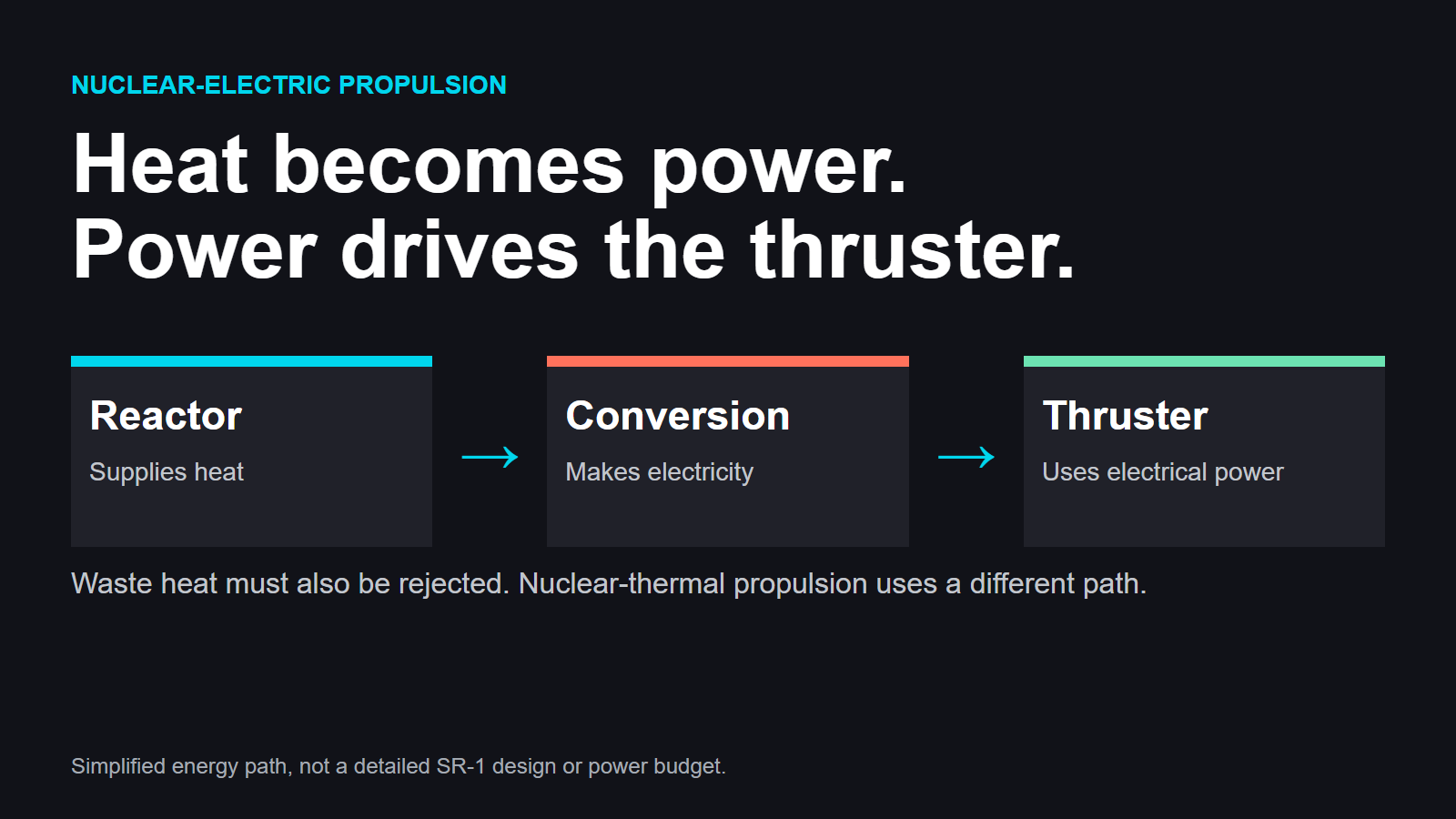
The first distinction is where the reactor's energy goes. In nuclear-electric propulsion, the reactor supplies power that is converted to electricity; electric thrusters use that electricity to propel the spacecraft. This is not a description of directly heating propellant in a nuclear-thermal engine.
The distinction matters because it changes the equipment and the tradeoffs. Power conversion, electrical distribution, heat rejection, and thruster operation become part of one spacecraft system. The reactor is not an isolated dramatic component sitting beside an otherwise ordinary vehicle.
NASA's mission page lists a 20-kilowatt-electric closed-Brayton-cycle power conversion system and a 12-kilowatt Hall thruster among the concept's features. It also lists a spacecraft bus with its own power-generation information. Those figures should not be casually added together and presented as a continuous reactor output or a measured flight performance.
For readers who build electrical systems, the familiar part is that watts are a system budget. A component rating alone does not explain what all other components receive, when they receive it, or how the system behaves during a transition.
The Radiators Belong in the Story
Spacecraft art often makes the thruster the central object. A reactor-powered system also has to reject heat. In space there is no surrounding air to carry that heat away in the everyday manner of a workshop cooling fan.
That makes thermal design part of the visible architecture. It is why a power source cannot be judged only by the compactness of the reactor itself. The conversion equipment, support structure, thermal paths, and radiating surfaces belong to the same engineering problem.
These are general implications of the propulsion approach, not an independent assessment of NASA's detailed design. The mission is interesting precisely because those implications have to become flight-qualified hardware rather than remain an attractive diagram.
Another useful distinction is endurance versus speed. Efficient use of propellant does not mean an electric thruster produces the same instantaneous push as a conventional chemical rocket. The complete mission trajectory depends on the propulsion system, mass, operating strategy, and available launch conditions. "Nuclear" is not a shortcut to a simple travel-time claim.
A Pathfinder, Not a Finished Transportation Network
NASA frames SR-1 Freedom as a first step toward later space nuclear capabilities, including surface power. The agency describes regulatory and launch precedent, supply-chain development, and operational experience as part of the mission's purpose.
That is a broader objective than delivering one payload. A new technology needs procedures and qualified components as well as a successful physical demonstration. The agreement with DOE is relevant because fuel, nuclear expertise, testing, launch integration, and operation are not all the same organizational task.
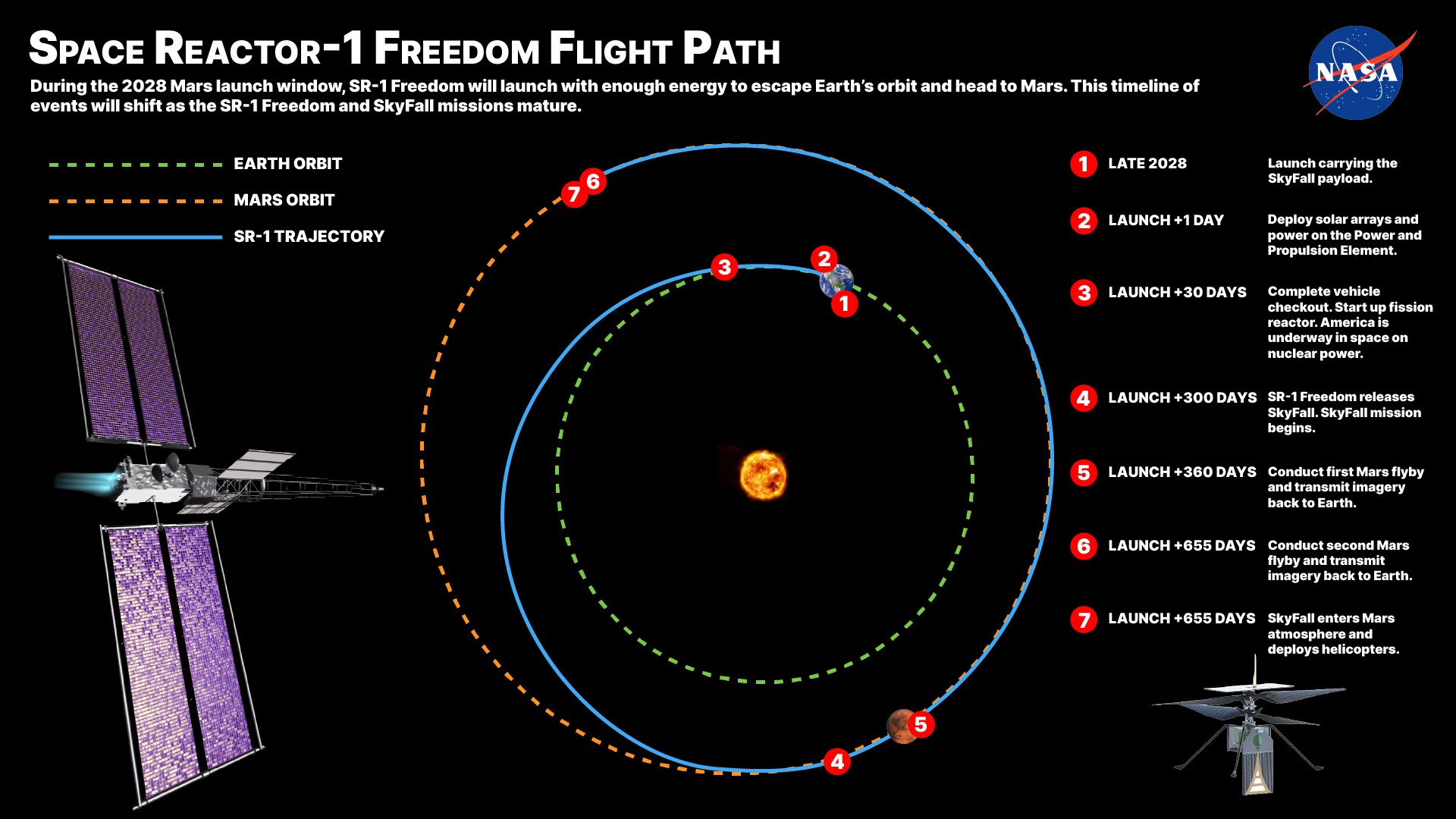
Photo credit
sr1 flight path
NASA · NASA media use guidelinesSource image downloaded without semantic alteration; responsive copies resized.
Resized for display; composition unchanged.
A sensible way to follow progress is to look for discrete milestones: design reviews, hardware tests, safety work, integration, and changes to the flight plan. None should be inferred from the signing of an agreement alone.
The late-2028 target is attention-grabbing. It is still a target. Keeping that word close to the date is not pessimism; it is the difference between reporting a plan and reporting an event.
Why Send Three Helicopters?
SkyFall builds on the demonstration that powered, controlled flight is possible on Mars. NASA's concept describes three helicopters with instruments for imaging, subsurface investigation, and measurements of the atmosphere.
The scientific attraction is mobility. Aerial vehicles can investigate terrain from perspectives and positions different from those available to an instrument that stays at one landing point. Multiple vehicles could make the exploration problem more flexible, but the mission concept should not be expanded into a guaranteed outcome at every proposed site.
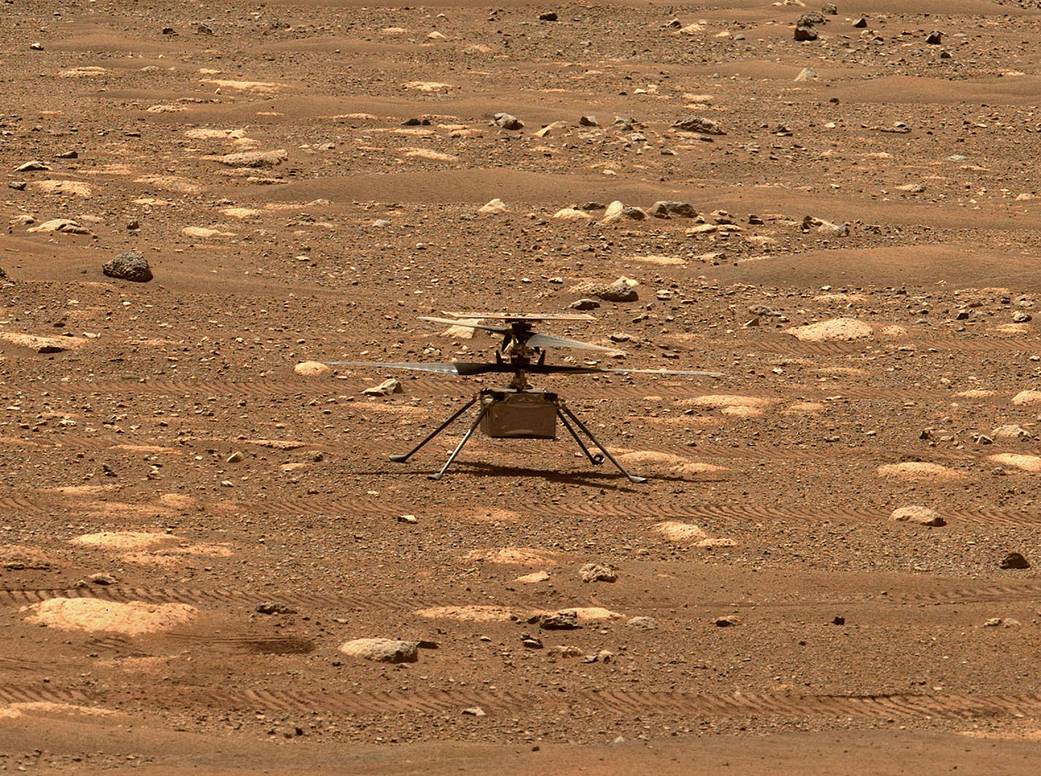
Photo credit
ingenuity
NASA/JPL-Caltech · NASA media use guidelinesSource image downloaded without semantic alteration; responsive copies resized.
Resized for display; composition unchanged.
The proposed mid-air deployment adds its own engineering challenge. Getting a vehicle to Mars, releasing it under the right conditions, and turning that release into controlled flight are separate tasks. A beautiful animation can make the transitions look effortless; the value of the concept is that the real transitions must be designed and tested.
Ground-penetrating radar and imaging could help investigate potential ice and terrain. A measurement sensitive to subsurface structure is not automatically a confirmed water discovery. Scientific interpretation depends on the instrument response, context, and competing explanations.
The Useful Maker Connection
This is not a project most readers can reproduce. It is a good case study in separating subsystems that are easy to collapse into one headline.
The reactor supplies energy. Conversion makes electrical power available. Thermal hardware handles waste heat. Thrusters exchange momentum. The payload pursues a different set of scientific goals. The mission plan coordinates them through time.
That habit scales down. A battery, regulator, motor driver, motor, and sensor can all work individually while the complete robot still fails. Seeing the paths between them is often more useful than buying a more powerful component.
SR-1 Freedom deserves attention for the same reason, at a very different scale. The new agreement helps define the collaboration. The future hardware and flight will determine what the plan achieves.
Would you rather see a deeper explainer on the propulsion system or on how SkyFall's helicopters could investigate Mars? Add your questions in the comments below.
Comments
Member comments are temporarily unavailable.
Log in to join the discussion.