
A Robot Can Remember the Wrong Thing. MIT Gave It a Way to Reconsider.
Published November 8, 2026
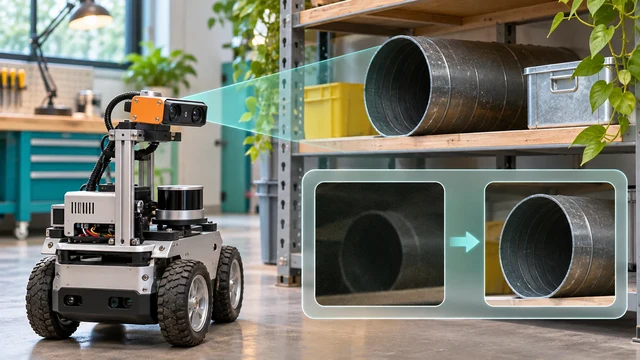
AI-generated editorial illustration of revisiting an uncertain visual description, not the actual MIT robot or a test result.
UQ-DAAAM compares object descriptions across views and revises uncertain memories. The June paper is earlier research, not robotic self-awareness.
A robot can remember the wrong thing very efficiently. If a poor camera view produces a confident but incorrect object description, storing that description gives a mistake a longer life.
MIT's UQ-DAAAM system addresses that problem by treating stored captions as evidence to question, rather than facts to preserve indefinitely. Its November 5 university coverage highlights research first posted in a June 6 preprint. This is an explainer of that earlier work, not a newly invented ability to think or become self-aware.
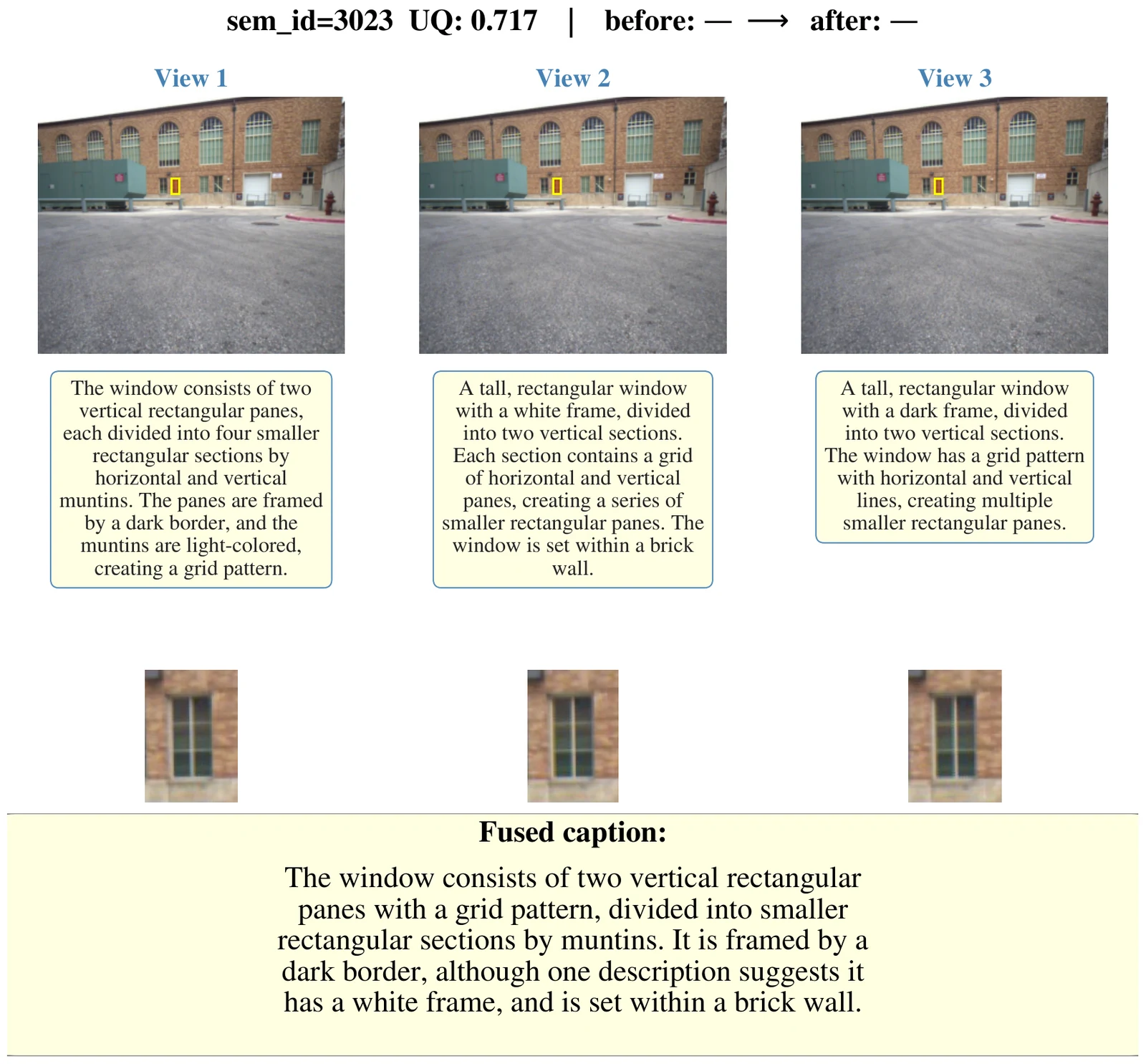
Image credit
UQ-DAAAM qualitative refinement example
Harry Zhang, Nicolas Gorlo and Luca Carlone · CC BY 4.0Resized and encoded as WebP; no semantic alteration.
Zhang, Gorlo and Carlone, June 2026 preprint, CC BY 4.0: a qualitative refinement example, not a general reliability score.
A Memory Can Be More Detailed and Still Be Wrong
The system builds on DAAAM, which connects descriptions from a vision-language model to objects in a spatial map. That is more structured than a disconnected list of captions: the description belongs to something observed at a place and time.
It also creates a persistent failure mode. An object partly hidden, poorly lit or seen from far away can receive a misleading label. Better organization does not make the label correct.
In the researchers' examples, additional views can change an interpretation. The useful question is not simply whether the model sounds certain. It is whether descriptions of the same physical object agree when the robot sees it differently.
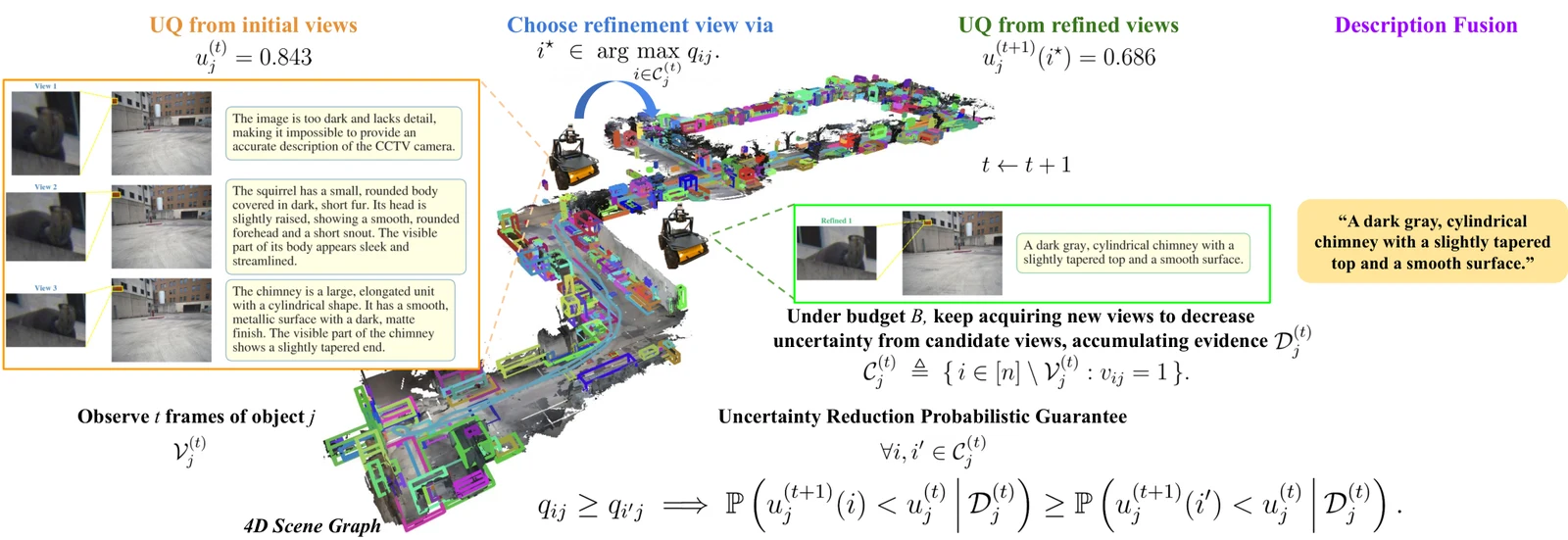
Image credit
UQ-DAAAM method figure
Harry Zhang, Nicolas Gorlo and Luca Carlone · CC BY 4.0Resized and encoded as WebP; no semantic alteration.
Zhang, Gorlo and Carlone, CC BY 4.0: method overview from the June preprint. Full scientific labels are retained.
Spend the Extra Look Where It Helps
The paper describes an object-level uncertainty score derived from the semantic differences between multiple captions. Under a limited budget of additional queries, the system prioritizes uncertain objects, selects useful views and fuses descriptions into a revised memory entry.
That budget matters. Asking a large model to reconsider every object repeatedly would add computation without necessarily helping the next task. A targeted approach asks where another observation is likely to change an uncertain interpretation.
The method's guarantees also have assumptions. A mathematical argument about selecting higher-quality views is not a guarantee that every real object will eventually be identified correctly. The available observations, object tracking and underlying captioning model still matter.
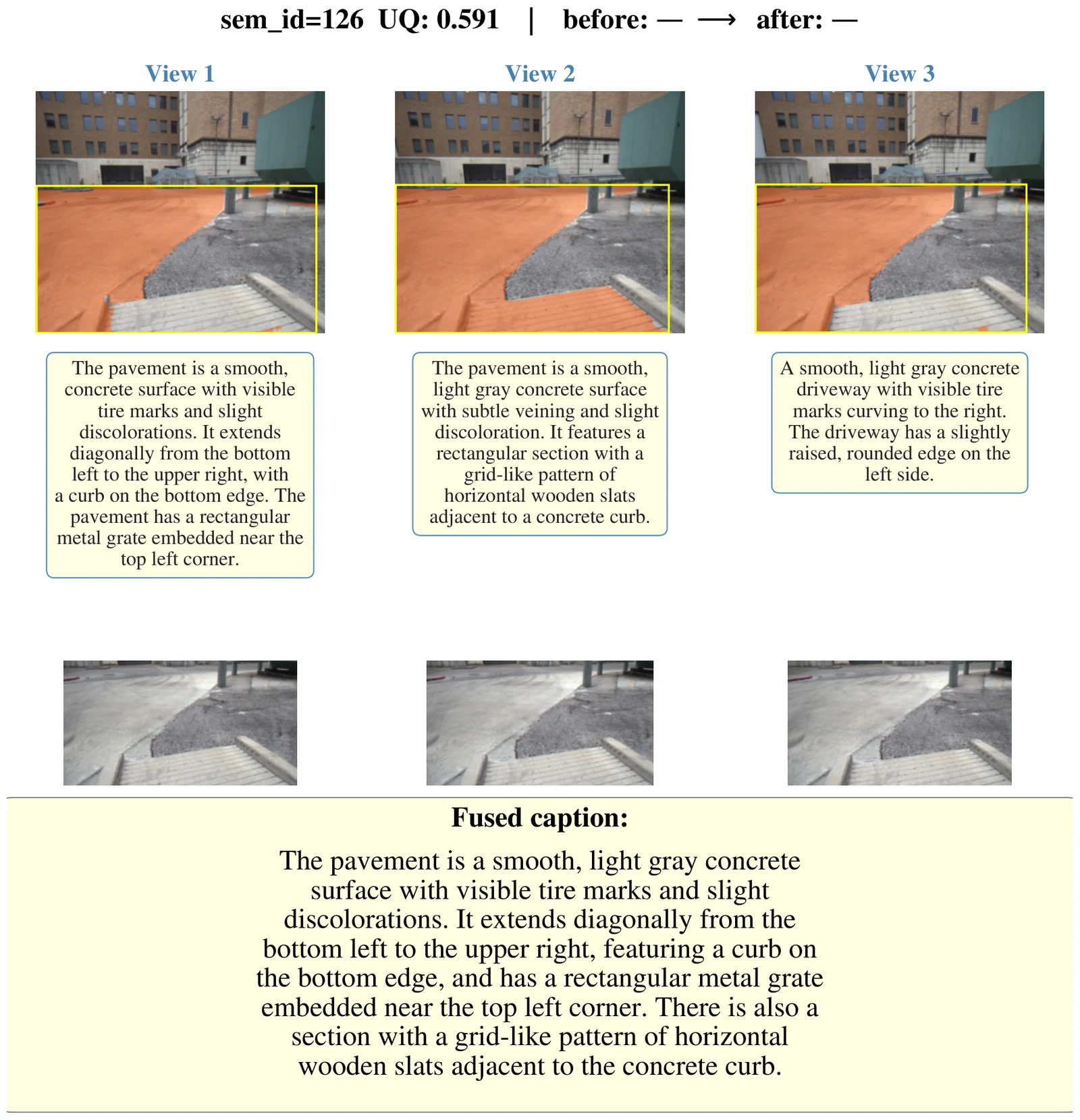
Image credit
UQ-DAAAM second qualitative example
Harry Zhang, Nicolas Gorlo and Luca Carlone · CC BY 4.0Resized and encoded as WebP; no semantic alteration.
Zhang, Gorlo and Carlone, CC BY 4.0: a second qualitative example, not a separate deployment test.
What the Reported Result Does and Does Not Say
MIT reports that refinement resolved ambiguities for about 92 percent of objects in the described evaluation while using two additional captions per object. It also reports a 5 percent improvement in description accuracy over the comparison method.
Those results should stay attached to the evaluation. They do not mean a robot is 92 percent reliable at every household task, that it can safely retrieve medical equipment, or that all its memories are now factual. The defibrillator example in MIT's article explains why a labeling error could matter; it is not a reported emergency deployment.
The approach is appealing because it gives uncertainty somewhere to go. Instead of adding a general disclaimer that a robot might be wrong, it identifies particular stored descriptions worth revisiting.
There is a broader design lesson here for any system that stores machine-generated interpretations. Retrieval can bring an old answer back quickly, but it cannot supply missing evidence. A useful memory system needs a way to keep provenance, recognize disagreement and replace an entry when better observations arrive.
That is the interesting achievement: a practical mechanism for revising uncertain records, not humanlike doubt. The distinction makes the work easier to evaluate and much harder to oversell.
Where would unreliable machine memory cause the most trouble in a project you use or build? Tell us in the comments below.
Comments
Member comments are temporarily unavailable.
Log in to join the discussion.