
Swift's Science Mission Is Over. Its Two-Decade Archive Isn't.
Published October 25, 2026
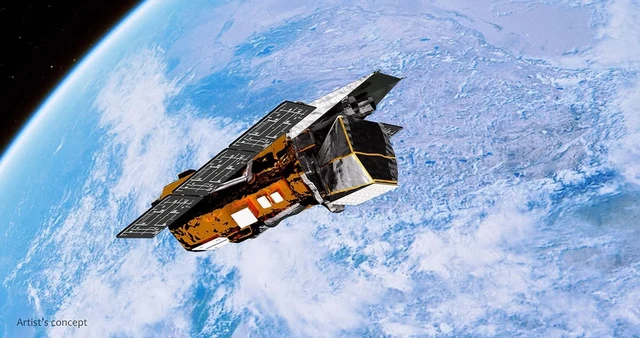
NASA's artist concept of Swift in orbit, not a photograph of its final orbit or reentry.
Atmospheric drag has ended Swift's observations. The fast-turning observatory leaves more than 2,000 gamma-ray bursts and an archive astronomers can keep exploring.
Swift was built to notice an explosion and turn before the best evidence faded. After more than two decades, the spacecraft has reached a point where even a working telescope cannot do that job properly: its orbit is low enough that atmospheric drag prevents steady pointing.
NASA announced the end of its science mission on October 23. The Neil Gehrels Swift Observatory made its final observation on October 20. It was below approximately 275 kilometres, or 171 miles, above Earth when the announcement was issued.
The agency expects reentry within weeks. That is a forecast, not a dated appointment; changing upper-atmospheric conditions affect orbital decay. The end of observations also should not be confused with a confirmed reentry, which had not been announced in the source used for this report.
A Telescope Built to Turn Quickly
Swift launched on November 20, 2004, for a two-year primary mission. Its particular talent was combining detection, position reporting and rapid follow-up. Once it found a gamma-ray burst, it could alert other observatories and swing its own optical/ultraviolet and X-ray instruments toward the location, typically in about a minute.
That speed mattered because an afterglow changes while astronomers are organizing their next observation. Swift made the response part of the observatory's architecture, rather than leaving every detection to become somebody else's late-arriving target.
One early example was GRB 050509B in May 2005. The gamma-ray event lasted just 0.03 seconds. Swift detected 11 X-ray photons in the follow-up, establishing the first detected afterglow of a short burst. Eleven photons sounds modest beside a spectacular space image, but arriving in time made them scientifically important.
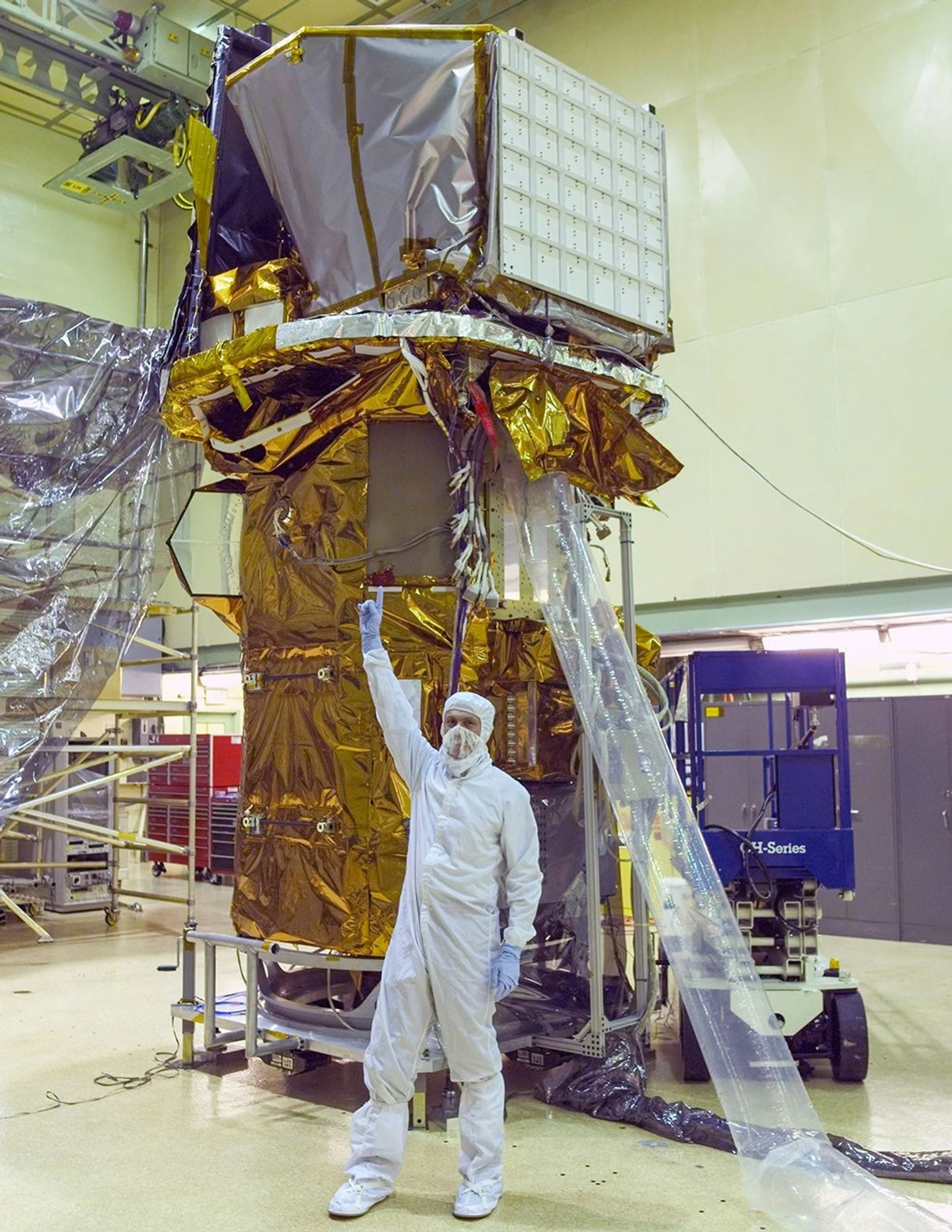
NASA's September 9, 2003 cleanroom photograph, before Swift's 2004 launch.
The Observations Do Not End With the Observer
NASA's end-of-mission tally includes more than 2,000 gamma-ray bursts, more than 1,400 supernovae and contributions to approximately 7,000 scientific papers. Swift also studied active galaxies, stars disrupted by black holes, asteroids and comets. Its useful life extended well beyond the brief originally planned for it.
The cleanroom photograph accompanying this article is from 2003, before launch. Neil Gehrels stands beside the spacecraft that would later bear his name. It is a useful contrast with the orbital artwork: a physical instrument built and checked by people, then kept working long enough to become a large astronomical archive.
That archive remains available for investigation after the science mission stops collecting new data. Ending operations closes a stream of observations, not every question that can be asked of the existing measurements. Swift's lasting contribution includes the observing habits it helped establish: detect quickly, report a position, and gather another kind of light while the event is still changing.
Which Swift discovery or rapid-response observing technique should we revisit? Tell us in the comments below.
Comments
Member comments are temporarily unavailable.
Log in to join the discussion.