Europe's AI Transparency Rules Just Switched On
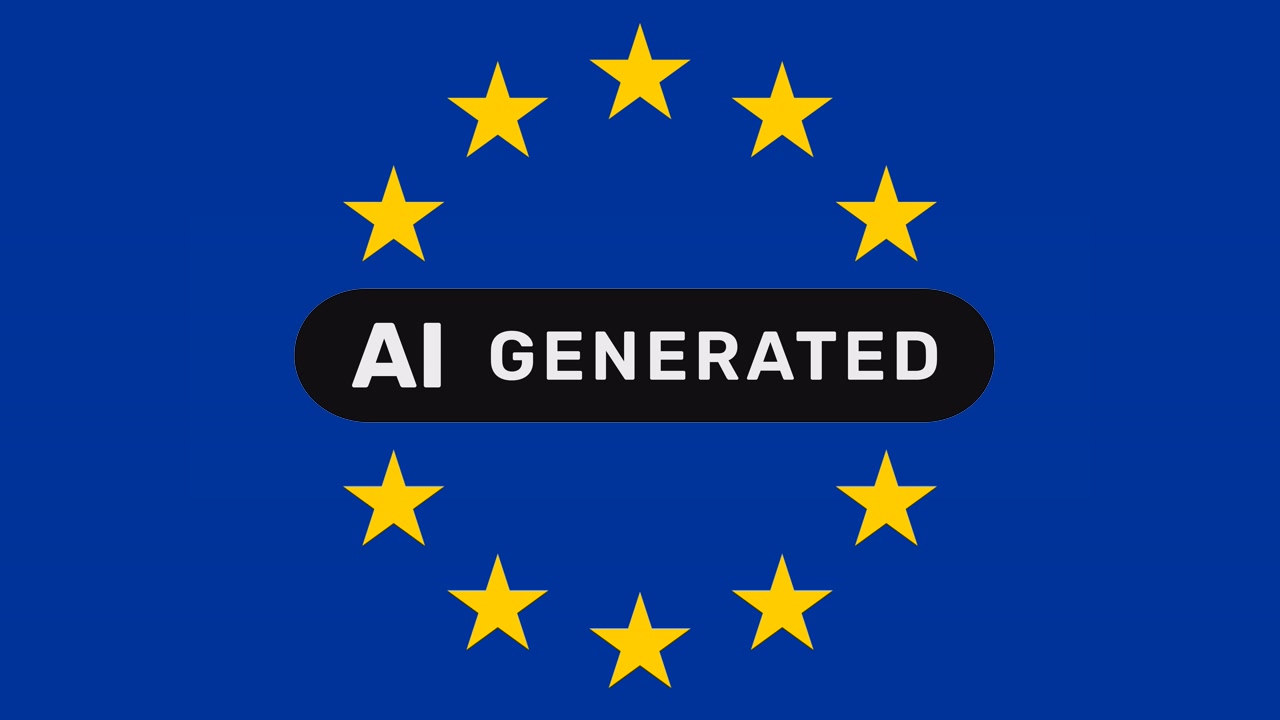
The EU's Article 50 rules now require notices for chatbots, deepfakes, synthetic media, and some biometric systems, with important exceptions.
Europe's AI Act stopped being a future-tense policy story on August 2, 2026. A major set of transparency rules is now in effect, requiring people in the EU to be told when certain machines, media, and biometric systems are doing more than they appear to be doing.
The rules are broad enough to reach chatbots and deepfakes, but they are not a universal "made with AI" sticker for everything touched by software. The useful story is in the dividing lines: who has to disclose what, which labels must be visible to people, and which marks are meant to be read by machines.
Four situations now trigger transparency duties
The European Commission's Article 50 summary groups the obligations into four cases.
Providers must design covered systems so people are informed when they are interacting with AI. Providers of systems that generate or substantially manipulate text, images, audio, or video must also make that synthetic origin detectable through a machine-readable mark.
Deployers - the people or organizations actually using a system - have a different set of duties. They must notify people who are exposed to emotion recognition or biometric categorization. They must also clearly disclose deepfake media and some AI-generated text about matters of public interest when that text did not receive human review or editorial control.
That split matters. A machine-readable signal embedded by a model provider is not the same thing as the visible label a publisher may need to show an audience. One helps software identify synthetic material; the other tells a person what they are looking at.
The AI badge is optional, but disclosure is not
The EU has released three visual markers: a basic AI icon, a "Fully AI-Generated" label, and a "Partially AI-Modified" label. The Commission says those icons are free for anyone to use, with no attribution required.
Using those exact icons is optional. Meeting the underlying disclosure requirement is not. A deployer can use another clear approach, but the notice still has to be perceivable and distinguishable when a person first encounters the covered content.
The Commission also says the icon alone does not prove compliance. Context, placement, accessibility, and whether the label survives reposting or downloading can all matter. A tiny mark buried behind another interface element misses the point even if the correct file technically exists somewhere on the page.
Not every edit or AI-assisted article needs a warning
Article 50 includes boundaries that prevent the rule from swallowing ordinary editing. The Commission says the machine-readable marking duty does not apply when a system performs a standard assistive editing function or does not substantially change the input or its meaning.
For public-interest text, the visible disclosure rule does not apply when the material has gone through human review or editorial control and a person or organization accepts editorial responsibility. Creative, satirical, and fictional works can also use a form of disclosure that does not interfere with the work itself.
There is a narrow transition period too. Generative AI systems placed on the market before August 2 have until December 2, 2026 to meet the marking and detection obligation. Deepfakes released before August 2 do not have to be labeled retroactively, though the Commission encourages it.
Enforcement gives the labels teeth
National market-surveillance authorities will handle most enforcement, with roles for the EU AI Office and the European Data Protection Supervisor in defined areas. The Commission lists potential company penalties of up to 15 million euros or 3 percent of worldwide annual turnover, with proportional treatment for smaller businesses.
The immediate effect will not be a perfectly labeled internet. It will be a long implementation test across model builders, app developers, publishers, advertisers, and platforms. They now have to decide where synthetic provenance lives in a file, where a human-facing warning appears, and who remains responsible when content moves between systems.
That makes August 2 less like the launch of one new badge and more like the start of a chain-of-custody requirement for AI media. The technology can still generate, edit, and imitate. In covered cases, it can no longer count on doing so invisibly.
Comments
Member comments are temporarily unavailable.
Log in to join the discussion.