Pacific Fusion's New Campus Is a Big Bet, Not a Power Plant Yet
Published September 10, 2026
Pacific Fusion broke ground in Albuquerque alongside an NNSA agreement. The milestone matters, but high-yield research and commercial electricity are different tests.
A groundbreaking makes an energy project look tangible: a place, a construction plan, a future machine. It does not make the scientific and engineering tests disappear. Pacific Fusion's Albuquerque milestone is worth covering with both ideas in view.
On August 25, the National Nuclear Security Administration announced an agreement with Pacific Fusion as the company broke ground on its high-yield fusion campus. The proposed work connects fusion research with national-security science as well as the company's energy ambitions.
What the Agreement Does, and Does Not, Establish
The memorandum creates a framework for collaboration. It is not evidence that the campus is already producing fusion electricity, and it does not remove the need for separate arrangements and funding for specific work.
That makes this an infrastructure and research story. The interesting question is what experiments the planned facility can enable, what those experiments measure, and how their results will be made understandable outside the project.
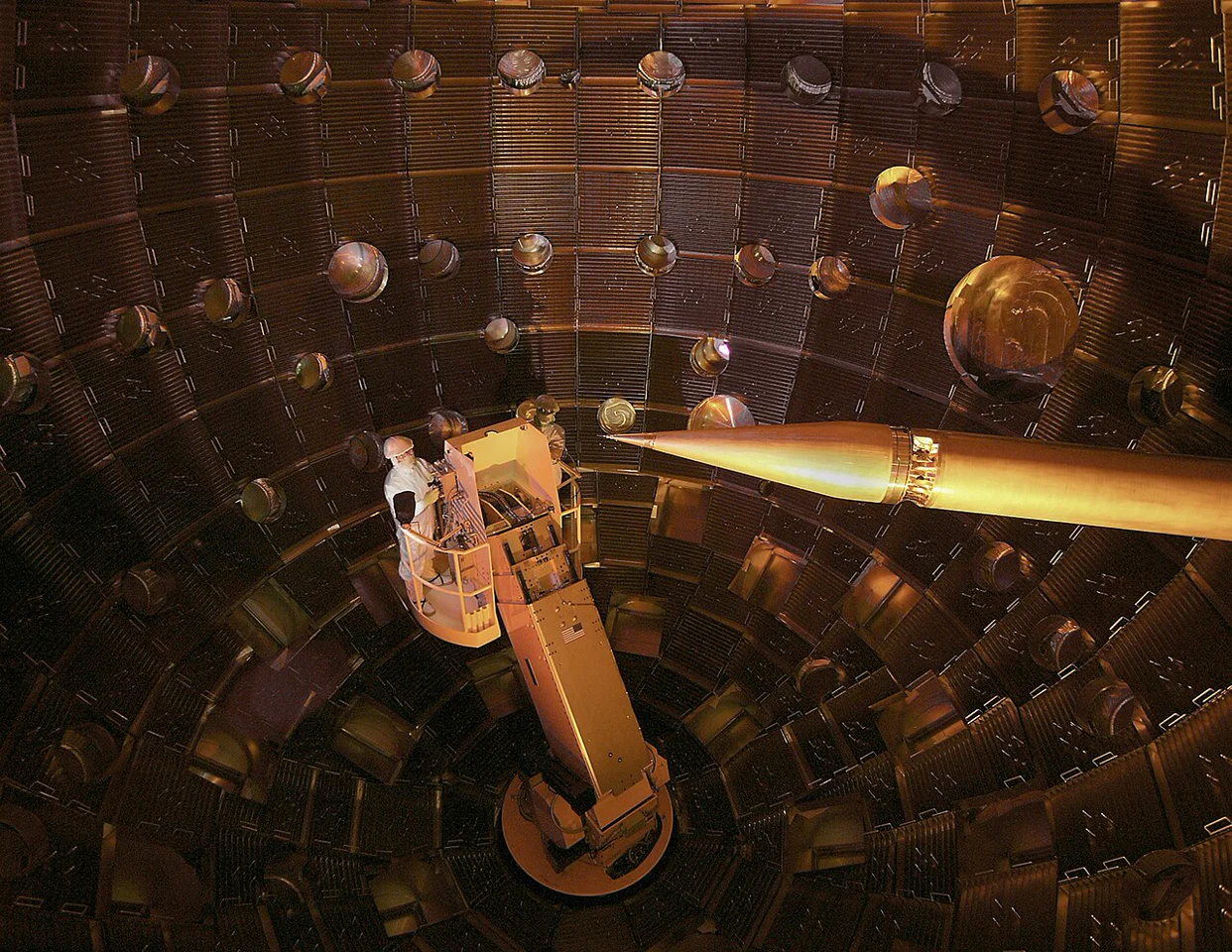
The lead image is a public-domain reference photograph of Lawrence Livermore's National Ignition Facility target chamber. It illustrates the physical scale of fusion research hardware; it does not depict Pacific Fusion's facility or imply that the two use identical machinery.
Keep the Energy Ledger Honest
When we evaluate an ambitious energy machine, the boundary around a performance claim matters. Energy arriving at a target, energy consumed by supporting equipment, and useful electricity delivered outside the facility are different quantities.
An improvement at one boundary can be a genuine achievement without settling the others. The useful response is neither to dismiss the experiment nor to silently substitute a more exciting claim. Ask exactly what was measured, where, and over what period.
That is also a good habit for smaller builds. A motor may look efficient without its controller's losses included. A battery-powered device may appear to run indefinitely until you account for the separate supply feeding its sensors. An energy ledger becomes informative when it includes every input relevant to the question being asked.
The Next Evidence We Want
Our checklist for following this project is straightforward: distinguish plans from completed hardware, distinguish a single experimental result from repeatable operation, and distinguish research performance from delivered power.
We would also look for enough detail to understand a result's limitations. Can another team interpret the measurement? What maintenance is required between runs? Which supporting systems dominate the work? Those are reporting questions, not claims that this particular facility has already succeeded or failed at them.
The campus is a meaningful commitment to build. Its eventual value will be established by what happens inside, and by how clearly that evidence is reported.
What measurement would most change your confidence in a fusion project? Explain your test in the comments below.
Comments
Member comments are temporarily unavailable.
Log in to join the discussion.