
Japan Launches MMX to Bring a Piece of Phobos Back to Earth
Published October 20, 2026
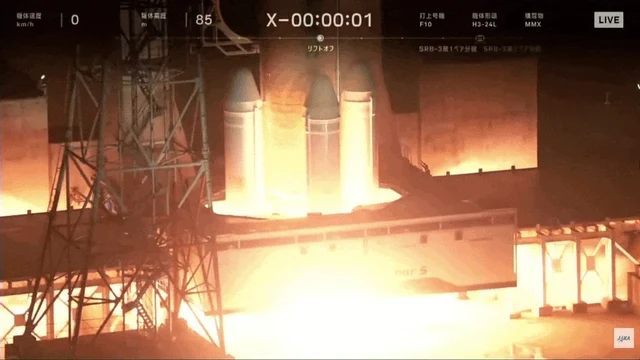
(c) JAXA. An ignition frame from the actual MMX launch sequence, just before liftoff. Used for this immediate mission-news report, not advertising.
Image credit
MMX launch aboard H3 at Tanegashima
JAXA · JAXA immediate news useStill frame extracted from JAXA's launch sequence distributed by ESA; resized and encoded as WebP. Not a recreated launch or an image of a different rocket.
MMX has launched on an H3 rocket from Japan. Arrival at Mars, Phobos sampling and the planned 2031 Earth return remain separate milestones still ahead.
Japan's MMX spacecraft is on its way. An H3 rocket launched the Martian Moons eXploration mission from Tanegashima at 19:41 UTC on October 19, equivalent to 04:41 in Japan on October 20. ESA's launch confirmation marks a real change from the prelaunch plan: the mission has left the ground.
The destination is the Mars system, with Phobos as the intended sampling target. JAXA leads the international mission, which is designed to study both Martian moons and eventually bring material from Phobos to laboratories on Earth. Launch is the first completed step in that much longer sequence.
Our earlier MMX explainer covers the scientific instruments and sampling mechanisms. This update is about what the launch establishes, and what it does not establish yet.
A Successful Departure, Not a Sample Already Collected
ESA confirms the launch and describes preparations for arrival at Mars next summer. Its contribution includes deep-space communications equipment and support from the Estrack ground-station network, which helps send commands and receive spacecraft data.
Those connections are part of the mission's working infrastructure, not simply a way to deliver attractive photographs. A distant spacecraft needs an operational link through which people can command it and learn what it has actually done.
The next milestones remain ahead. NASA's October 15 mission update describes an August 2027 arrival target, Phobos sampling no earlier than December 2028, and a planned return to Earth in 2031. These are mission plans, not accomplishments implied by a successful rocket launch.
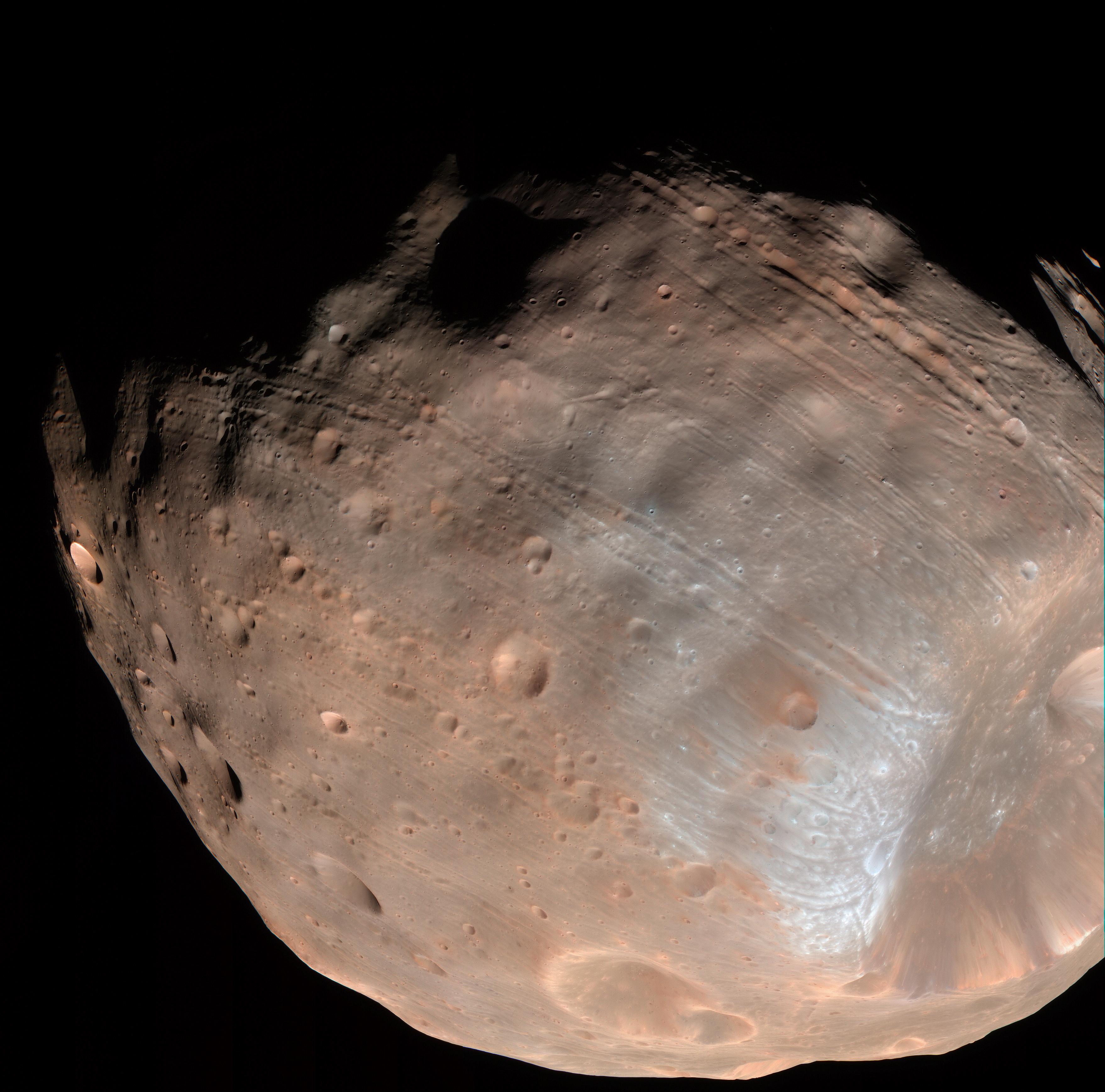
Archival NASA orbital photography of Phobos, the sampling target. MMX has not yet arrived or taken a sample.
Why a Piece of Phobos Is Worth the Trip
Phobos's origin is unresolved. A captured asteroid and material left from a giant impact on Mars would tell different stories about the moon's formation. Close observations and laboratory analysis of returned material are intended to help distinguish those possibilities.
The attractive part of sample return is what happens after the spacecraft's visit. Researchers can use laboratory instruments on Earth rather than relying exclusively on the equipment that fits aboard the mission. The samples still need to be collected, preserved, and delivered with their scientific context intact.
NASA is contributing the MEGANE neutron-and-gamma-ray instrument and the gas-powered P-Sampler technology demonstration, alongside other support. Its planned allocation is about 15 percent of the eventual returned sample. No part of that allocation has been returned by MMX at this point.
For now, the change is concrete enough: a mission that was waiting at a launch site has begun its journey. Arrival, surface operations, collection, and Earth return will each need their own evidence before they become the next headline.
Which milestone should we unpack next, the approach to Phobos or how the spacecraft will collect its sample? Leave your questions in the comments below.
Comments
Member comments are temporarily unavailable.
Log in to join the discussion.