A breadboard counter that counts one press once
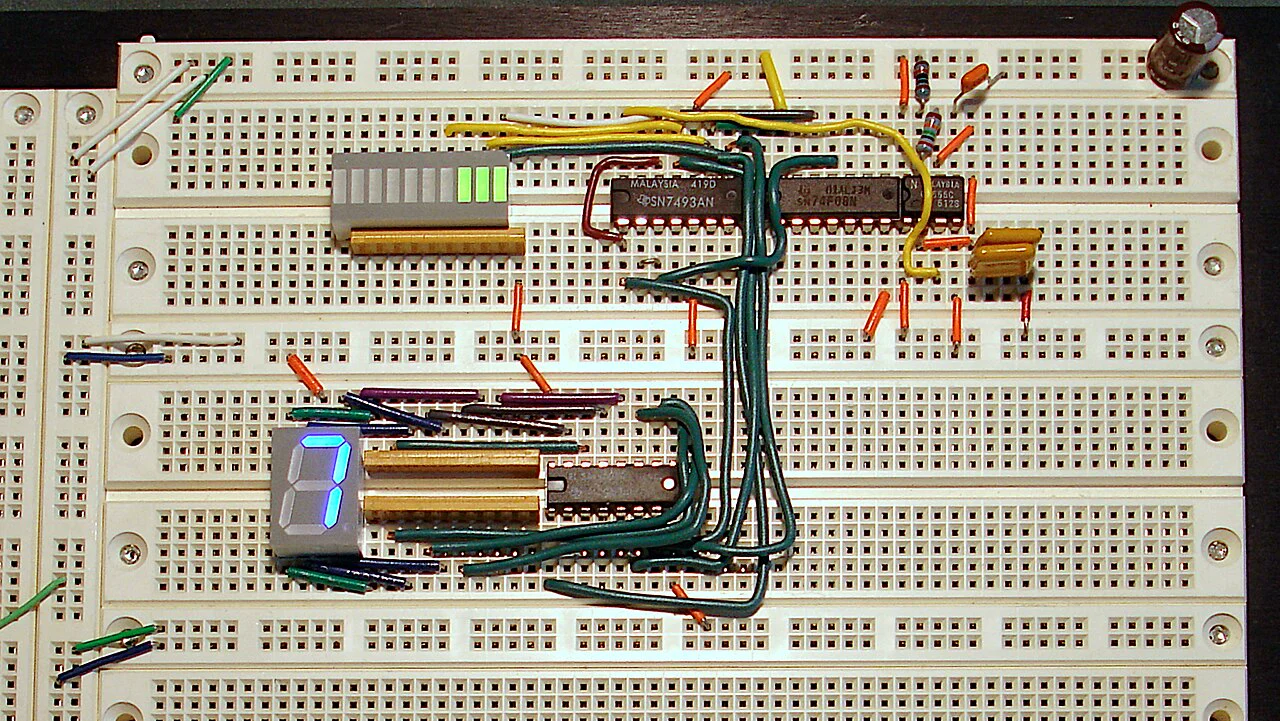
A small logic exercise built around the least glamorous requirement: a pushbutton must not count as five presses.
One press. One count. That is the entire brief.
A pushbutton can make several electrical transitions while its contacts settle. Feeding those transitions straight into a counter is an efficient way to count something other than button presses.
The bench check
- Pick a documented counter circuit and a debounce method suited to its input.
- Check supply voltage, logic levels, decoupling and input limits against the actual component data sheets.
- Establish a known reset state.
- Test slow presses, quick presses and a held button separately.
Keep the button wiring short and give the circuit a deliberate input state. An unconnected input is not a reliable zero.
The display comes last. First establish that the input produces the intended transition; then check what the counter does with it. Otherwise a wiring fault and a button problem can look annoyingly alike.
Label the supply rails. Future troubleshooting should not begin with guessing which red wire is which.
Materials
- Breadboard and documented low-voltage counter circuit
- Momentary button and appropriate input resistor
- LEDs with current-limiting resistors
- Current-limited supply
Build Steps
- 1
Prove the counter
Feed a known clean input before adding a mechanical button.
- 2
Debounce the input
Compare the raw switch state with accepted presses.
- 3
Test the awkward presses
Try holds and slow releases, then verify reset behavior.