
MIT's Inflatable Robot Crawled About 6.5 Feet Through an Intestine
Published October 29, 2026
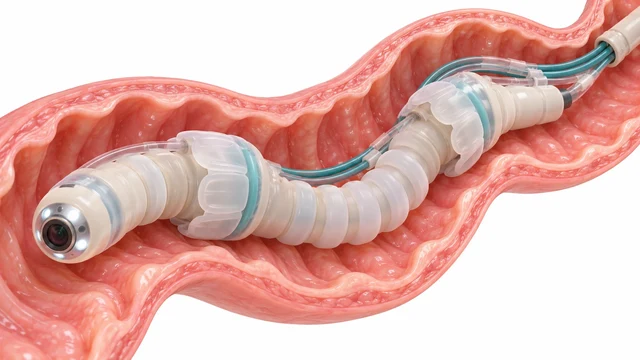
Independent educational illustration, not MIT's prototype or a procedure in a patient. The isolated cutaway explains soft steering and anchoring.
A preclinical soft robot combines pneumatic steering, alternating anchors and kirigami sleeves. Its animal tests show useful tools, not an autonomous device ready for patients.
A machine moving through a slippery, flexible tube needs somewhere to push. Making its body softer does not automatically solve the traction problem. Without a reliable hold, an actuator can deform without taking the device where its operator wants it to go.
A Science Robotics study published October 28 reports a soft enteroscopic robot designed around that difficulty. MIT says it travelled about six and a half feet through the small intestine in animal studies, while also demonstrating tools for imaging, tissue sampling and fluid delivery. This is preclinical research, not a robot already treating people.
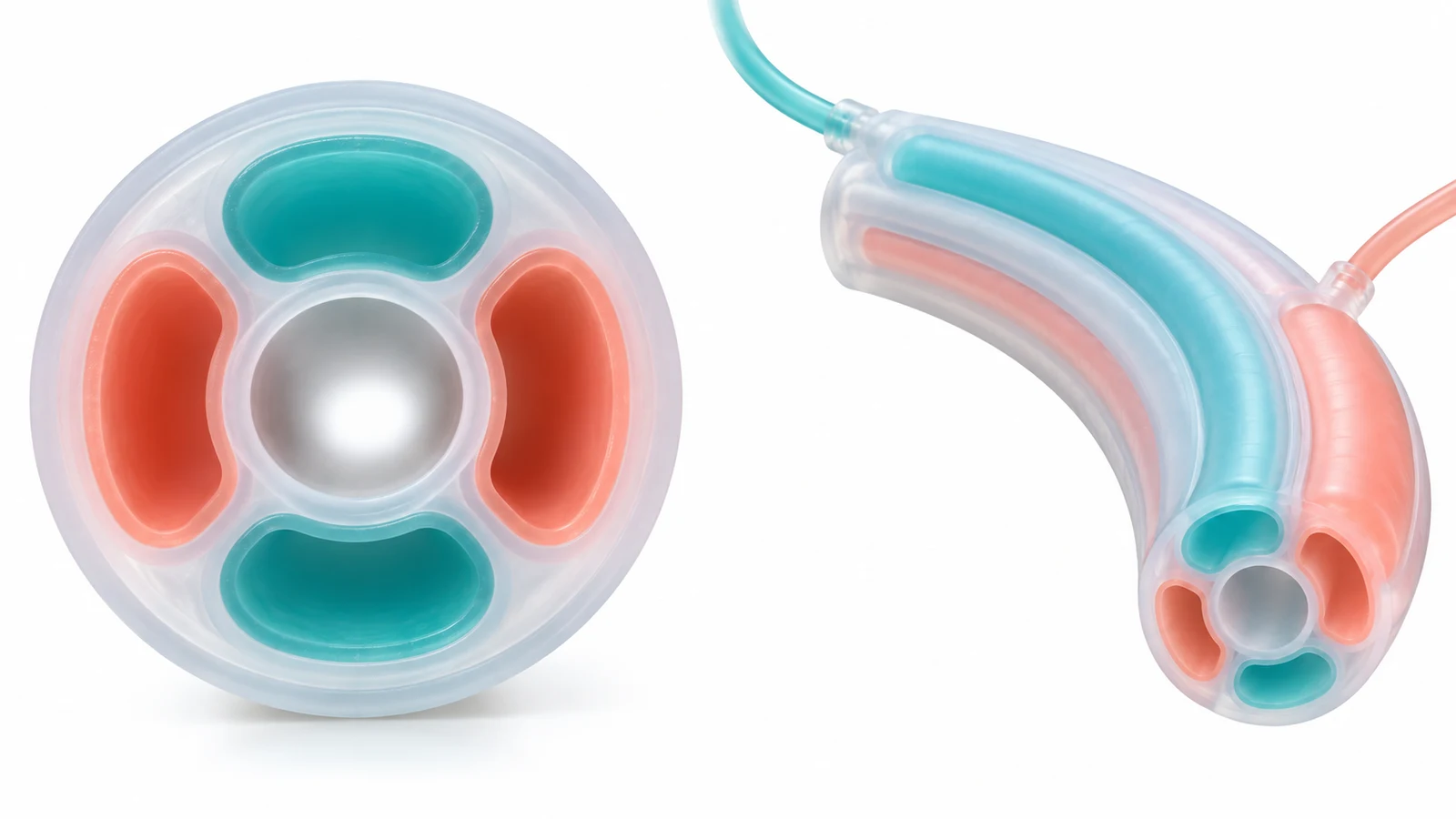
Concept illustration of pneumatic steering, not the team's engineering cross-section or fabrication instructions.
Movement Comes From a Sequence
MIT's account of the work describes a tube-like device with pneumatic actuators. Four chambers can be inflated in different combinations, changing how a section extends or bends. Controlling the air supplied to those chambers gives the operator a way to steer.
Additional expandable balloons at the head and tail take turns anchoring the robot. The useful movement comes from coordinating a hold with a change in shape, then transferring that hold. Inflation by itself is not the whole locomotion strategy. An anchor must hold at the useful moment in that cycle.
That division of labor is the detail worth noticing. Steering asks the body to change direction. Anchoring asks a surface to resist slipping. A device that performs both jobs still has to sequence them so that its movement is controlled rather than simply more forceful.
The illustrations here are simplified concepts. They are not fabrication drawings or photographs of the research device. The official MIT video shows the actual prototype and demonstrations.
How a soft robot inches through hard-to-reach places
MIT's actual prototype demonstration in preclinical research, not a patient procedure. The preview is an independent concept illustration, not a frame from this video.
A Cut Pattern Changes the Contact
The anchoring sections carry patterned sleeves inspired by kirigami, the cutting-and-folding counterpart to origami. MIT describes the material lying flat until a balloon expands. Stretching brings small three-dimensional features out of the sleeve, changing how it engages the slippery lining.
The aim is localized traction without relying on excessive stretching of delicate tissue. That is a design objective and reported mechanism, not a reason to assume that every contact is harmless. The size, shape and force of engagement all matter in a medical device.
For an engineering reader, the interesting principle is that a surface can change its frictional behavior when an underlying actuator changes shape. The sleeve is part of the motion system, not decoration placed around an otherwise complete robot.
Reaching a Location Is Only Part of the Job
UT Southwestern's report identifies the prototype as BIOSENTER and describes real-time imaging, biopsy and localized fluid delivery in preclinical work. Its account places the project within a continuing effort led in part by Binbin Ying, who developed the work with collaborators during and after his time at MIT.
The platform therefore combines access with intervention. Reaching a difficult location is useful only if an instrument can observe or act there in a controlled way. A camera, a tissue-sampling tool and a sprayer each impose different requirements on positioning and stability.
It would be premature to turn those demonstrations into a promise of a simpler procedure for every patient. A preclinical platform and a clinically established device are different stages of development, even when both can be shown performing a recognizable task.
The Tether Has Not Disappeared
The robot remains connected to external controllers by a cable, and a person guides it with a controller. It is not an autonomous capsule deciding where to go or which tissue to sample.
That boundary matters as much as the distance travelled. A useful next evaluation would examine navigation, tool positioning and tissue interaction together, rather than use the longest traversal as the only score. The teams say navigation and additional small-intestine applications remain areas of development.
The result is an inventive combination of soft actuation and changing contact surfaces, with clear work still ahead. Which engineering problem would you investigate first: traction, steering or holding position for a tool? Leave your reasoning in the comments below.
Keep exploring
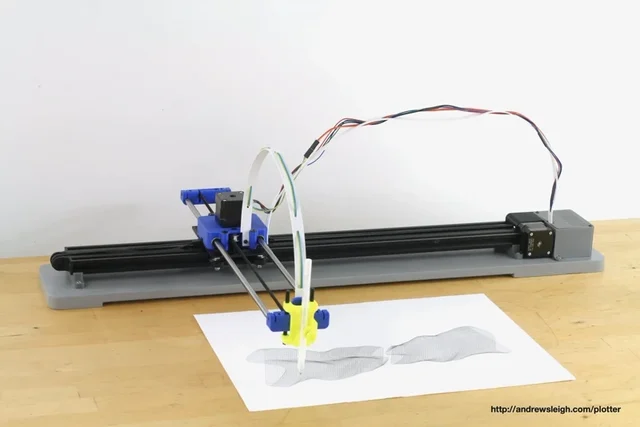
Andrew Sleigh's complete plotter writeup, with three design generations, original machine photos, parts lists and the SVG-to-G-code workflow.
Image credit
photos/v3/IMG_6608.jpg
Andrew Sleigh · MITResized without cropping and converted to WebP for the project card.
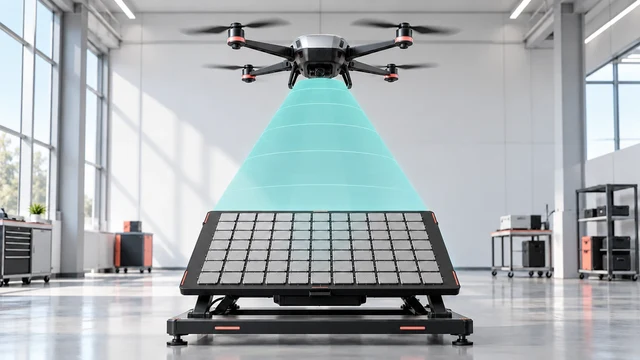
Reach reports a ten-hour flight using RF power beaming and automatic recharge decisions. The demonstration's dates, battery comparison and missing measurements matter.
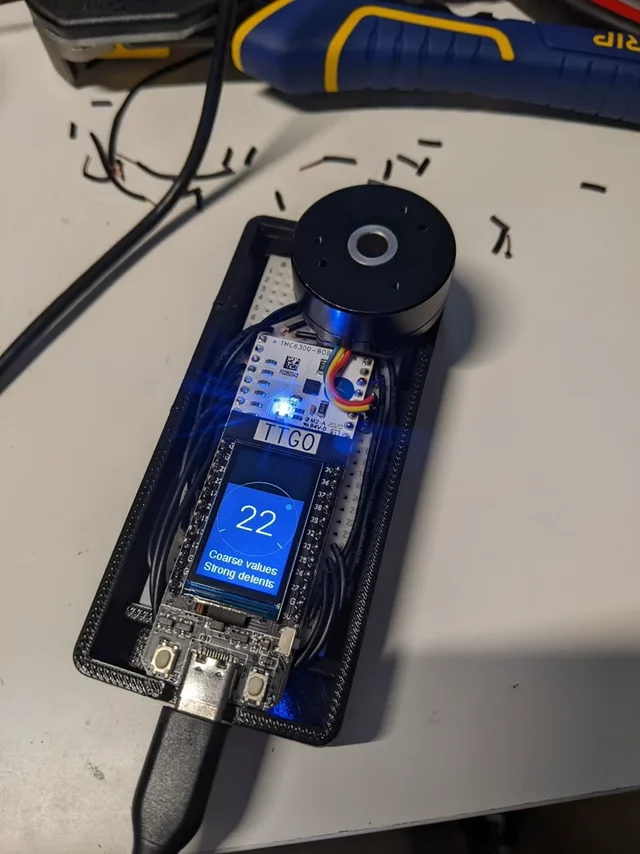
Scott Bezek's complete SmartKnob README: brushless-motor haptics, configurable stops and clicks, original prototype photograph and exploded animation, PCB notes, and build limitations.
Image credit
doc/img/PXL_20220212_013249074.jpg
Scott Bezek · Apache-2.0Resized without cropping and converted to WebP for the project card.
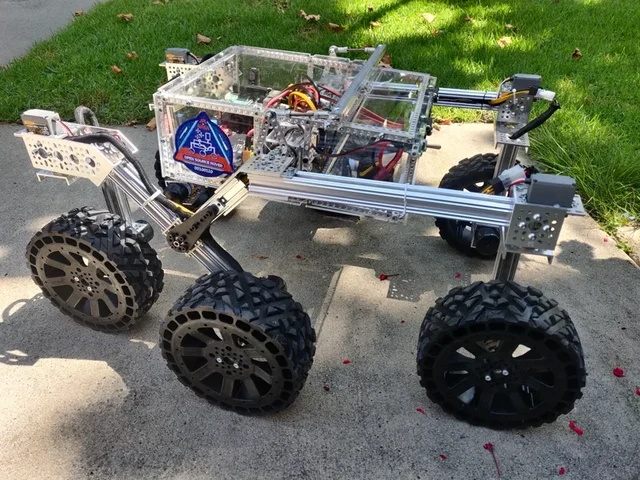
The complete reviewed JPL rover hardware manual: parts lists, wiring, PCB assembly, mechanical chapters, original build photographs and diagrams, optional mast, and downloadable schematics.
Image credit
images/osr-side-outside.jpg
JPL / California Institute of Technology and Open Source Rover contributors · Apache-2.0Resized without cropping and converted to WebP for the project card.
Comments
Member comments are temporarily unavailable.
Log in to join the discussion.