
Reach Says Its Drone Flew for 10 Hours on Wireless Power
Published October 29, 2026
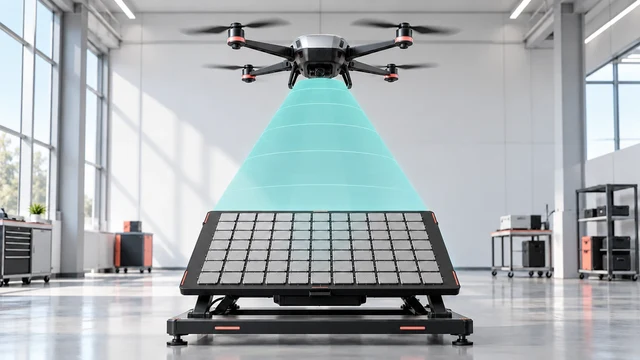
Independent illustration, not Reach's test apparatus. The colored beam is symbolic: radio-frequency power is not visible.
Reach reports a ten-hour flight using RF power beaming and automatic recharge decisions. The demonstration's dates, battery comparison and missing measurements matter.
A drone that flies for ten hours sounds like a battery breakthrough. Reach's demonstration is interesting for a different reason: the aircraft repeatedly received power from infrastructure outside the aircraft, without landing to plug in.
The company published its demonstration video on October 27 and a detailed announcement on October 28. It says a quadcopter sustained ten hours of autonomous flight using radio-frequency power beaming. The test itself took place September 22 at Virginia Tech, during an Energy Sentry event. Those are three different dates, not three separate flights.
10-hr Persistent Drone Flight with Wireless Power Beaming
Reach's original demonstration video, not independent testing. The preview is a separate concept illustration, not the actual apparatus or a frame from this upload.
1. Follow the Energy Loop
According to Reach, onboard processing monitored the battery's state of charge. When charged, the aircraft released the power link and moved away. At a programmed threshold, it returned and requested power. The transmitter then reacquired the receiver and resumed delivery.
The aircraft was therefore doing more than hovering at a fixed charging point. It was managing a cycle of receiving energy, leaving that position and returning for more. Reach says this happened without operator input, GPS, external flight-tracking sensors or a physical power tether.
Those are company-reported conditions. The official video provides a view of the demonstration, but it is not an independent replication or a complete engineering test report. Our illustrations explain the principle; they do not depict Reach's actual hardware or reconstruct its flight path.
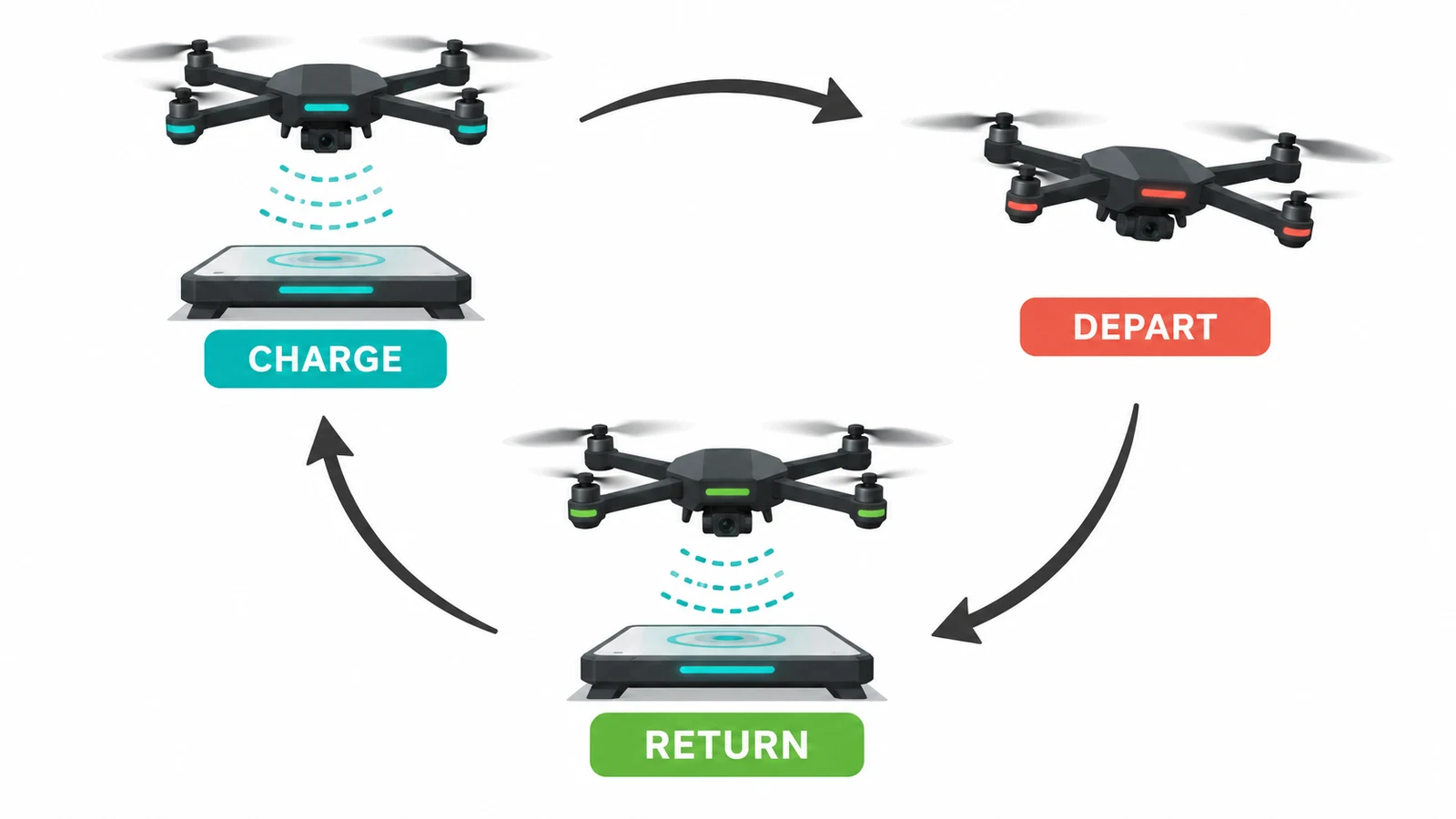
Concept illustration of the reported charge-depart-return logic, not a measured flight path or a drawing of Reach hardware.
2. Check What the Beam Replaces
The system uses electronically steered radio-frequency power, not a cable suspended under the drone. Reach describes directing energy to the receiver without mechanically moving the transmitter. The colored beam in our illustration is a visual convention: radio-frequency energy is not a visible turquoise cone.
This changes where an engineer has to look for the energy budget. The aircraft can have a small onboard reserve while relying on a transmitter to supply more energy during flight. A long flight does not, by itself, tell us how much electricity the whole installation consumed or how far the receiver could move before the link stopped being useful.
Nor does the absence of a physical tether remove the need for charging infrastructure. The useful operating area still depends on the power system. Treating this as unlimited battery-free flight anywhere would miss the main constraint.
3. Inspect the Comparison Before Repeating It
Reach compares the ten-hour run with approximately 90 seconds of battery-only flight for its test configuration, giving the advertised roughly 400-fold extension. That denominator matters. It is not a claim that an ordinary drone capable of a long battery flight suddenly gained 400 times that endurance.
The announcement does not provide enough information to establish a general operating range, a whole-system efficiency figure or performance in arbitrary outdoor conditions. Those would be important details for evaluating a practical installation. So would the behavior when a power link is lost and the energy reserve needed to recover safely.
The Interesting Part Is the Decision to Recharge
The engineering story is the coordination between a mobile receiver and an energy source. A robot that notices its own energy state, asks for power and resumes its work could need fewer battery-service interruptions. Whether this particular approach suits a job will depend on the charging geometry and the task, not endurance alone.
Reach has reported a notable demonstration. The next useful evidence would make its boundaries easier to evaluate, rather than simply promise an even longer hover.
Which missing measurement would help you judge it: range, efficiency, link-loss behavior or useful work completed? Share it in the comments below.
Keep exploring
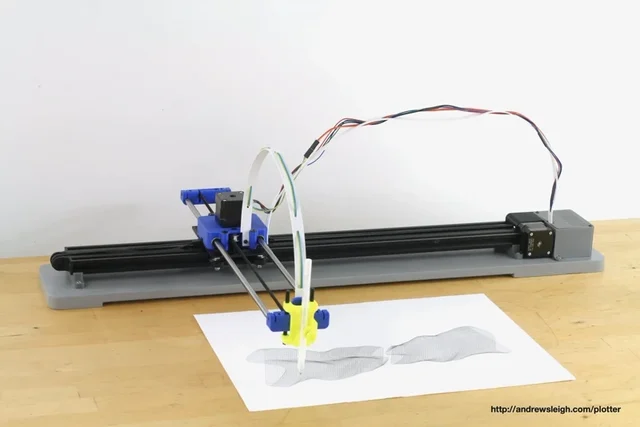
Andrew Sleigh's complete plotter writeup, with three design generations, original machine photos, parts lists and the SVG-to-G-code workflow.
Image credit
photos/v3/IMG_6608.jpg
Andrew Sleigh · MITResized without cropping and converted to WebP for the project card.
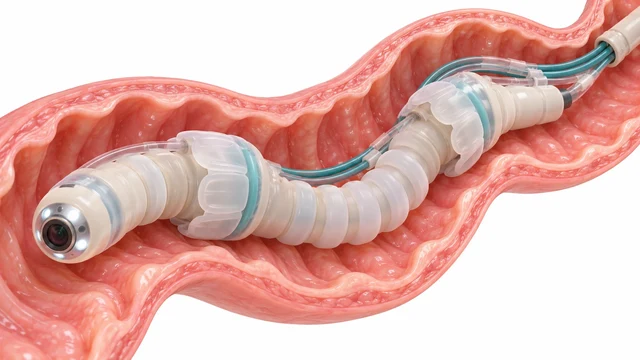
A preclinical soft robot combines pneumatic steering, alternating anchors and kirigami sleeves. Its animal tests show useful tools, not an autonomous device ready for patients.
Scott Bezek's complete SmartKnob README: brushless-motor haptics, configurable stops and clicks, original prototype photograph and exploded animation, PCB notes, and build limitations.
Image credit
doc/img/PXL_20220212_013249074.jpg
Scott Bezek · Apache-2.0Resized without cropping and converted to WebP for the project card.
The complete reviewed JPL rover hardware manual: parts lists, wiring, PCB assembly, mechanical chapters, original build photographs and diagrams, optional mast, and downloadable schematics.
Image credit
images/osr-side-outside.jpg
JPL / California Institute of Technology and Open Source Rover contributors · Apache-2.0Resized without cropping and converted to WebP for the project card.
Comments
Member comments are temporarily unavailable.
Log in to join the discussion.