Revolutionizing Robotics: Adaptive Soft Arms and AI-Controlled Grasping
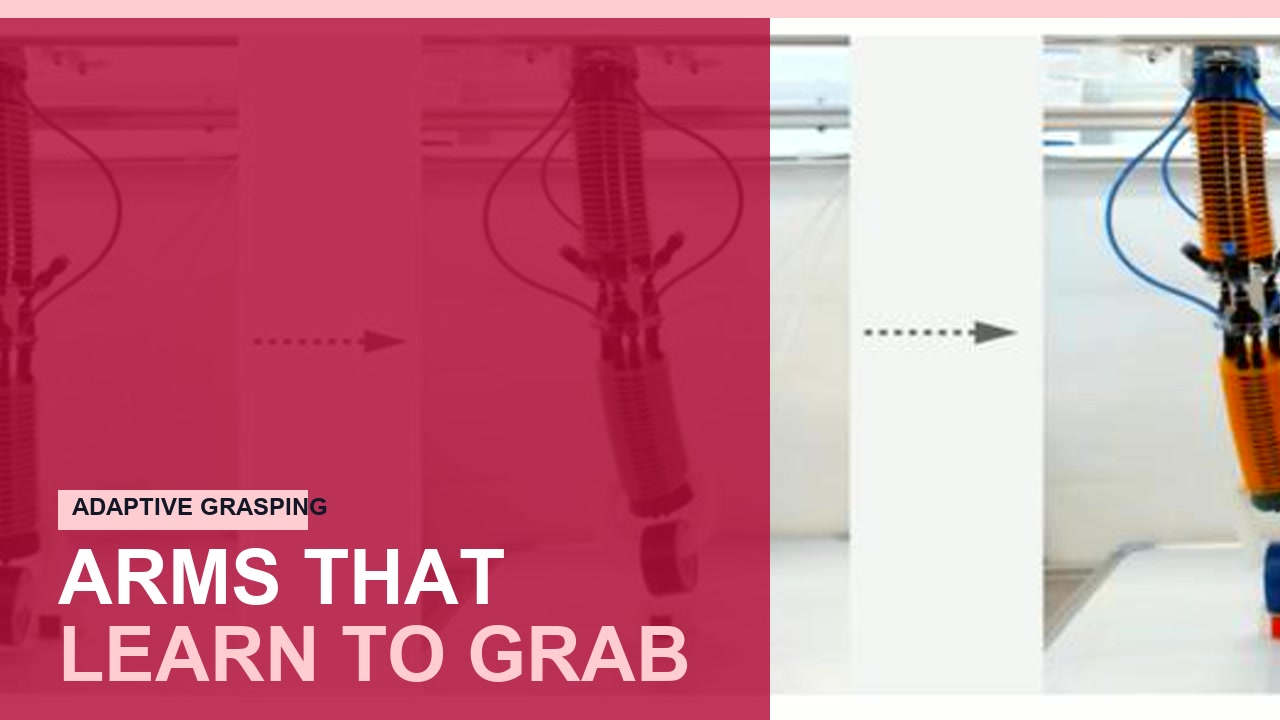
Soft robotics breakthroughs enable adaptive arms to learn motions and adapt to disturbances, while AI-controlled grasping simplifies underwater tasks.
Imagine a robot arm that can effortlessly pick up delicate objects, navigate through tight spaces, and even adapt to unexpected situations. Sounds like science fiction? Think again. Recent advances in soft robotics have led to the development of adaptive soft arms and AI-controlled grasping, revolutionizing the way robots interact with their environment. These breakthroughs have significant implications for various industries, from manufacturing and healthcare to space exploration.
The Power of Soft Robotics
Soft robotics is an emerging field that focuses on developing robots using flexible, pliable materials, rather than traditional rigid structures. This approach allows robots to mimic the dexterity and adaptability of living organisms, making them ideal for tasks that require precision and flexibility. Adaptive soft arms are a prime example of this technology in action.
Adaptive soft arms can learn many motions once and adapt instantly under disturbances. This means that they can be programmed to perform complex tasks, such as assembly or manipulation, without the need for extensive retraining. In fact, studies have shown that these arms can adjust their behavior in real-time, allowing them to respond effectively to unexpected events.
AI-Controlled Grasping: A Game-Changer for Underwater Tasks
Another significant breakthrough in soft robotics is AI-controlled grasping. This technology uses machine learning algorithms to enable robots to grasp and manipulate objects with unprecedented precision. But what's truly impressive about this innovation is its ability to simplify underwater tasks.
Underwater environments pose unique challenges for robotic systems, due to the need to navigate through water currents and maintain a stable grip on slippery surfaces. AI-controlled grasping addresses these issues by allowing robots to adjust their grasp in real-time, ensuring that they can securely hold onto objects even in turbulent waters.
Implications and Future Directions
The potential applications of adaptive soft arms and AI-controlled grasping are vast and varied. In manufacturing, for example, these technologies could enable the creation of more efficient and flexible production lines. In healthcare, they could facilitate the development of robots that can assist with delicate medical procedures or provide support to patients in rehabilitation.
In space exploration, soft robotics could play a crucial role in the design of robots that can navigate through tight spaces and interact with fragile equipment. As researchers continue to push the boundaries of this technology, we can expect even more innovative applications to emerge.
Looking ahead, it's clear that adaptive soft arms and AI-controlled grasping are just the beginning of a new era in robotics. By harnessing the power of soft materials and machine learning algorithms, we're creating robots that are not only more versatile but also more adaptable and resilient. As we continue to explore the possibilities of this technology, one thing is certain: the future of robotics has never looked brighter.
Comments
Member comments are temporarily unavailable.
Log in to join the discussion.