Wearable Soft Robots: Revolutionizing Assistive Technology
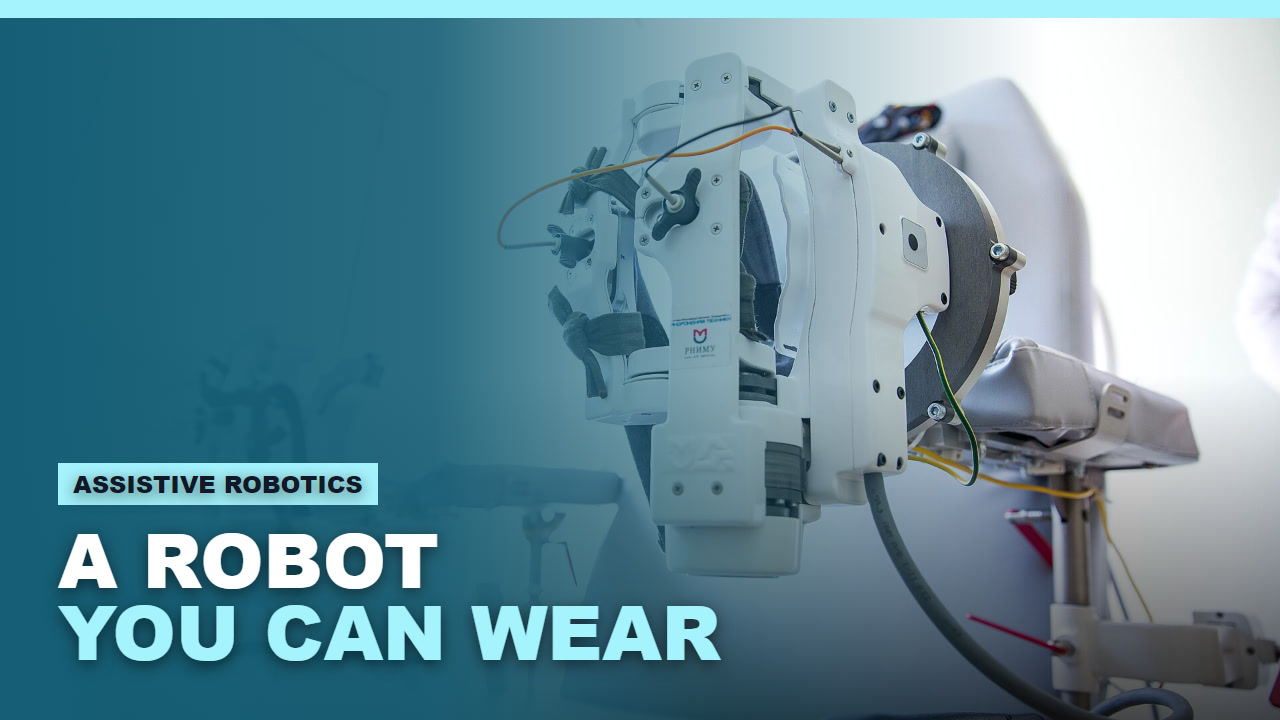
Recent breakthroughs in wearable soft robots have led to personalized exosuits with machine-learning controllers, poised to transform industries like healthcare and manufacturing.
Wearable soft robots are no longer the stuff of science fiction. Recent advancements in this field have given rise to personalized exosuits that can adapt to each user's unique motion patterns. These breakthroughs have significant implications for various sectors, particularly healthcare and manufacturing, where assistive technology has the potential to revolutionize the way tasks are performed. Imagine a future where workers with mobility impairments can effortlessly lift heavy objects or patients with limited dexterity can easily perform daily activities - this is the promise of wearable soft robots.
The Science Behind Wearable Soft Robots
The development of these personalized exosuits relies on two critical components: machine-learning controllers and physics models. By combining these technologies, researchers have created systems that can learn to anticipate and respond to each user's specific motion patterns. This is particularly noteworthy in the context of assistive technology, where one-size-fits-all solutions often fall short.
Applications in Healthcare and Manufacturing
The potential applications of wearable soft robots are vast and varied. In healthcare, these exosuits could enable patients with mobility impairments to regain independence and perform daily activities with greater ease. For instance, a patient with a spinal cord injury could use an exosuit to walk or stand without assistance. Similarly, in manufacturing, wearable soft robots could empower workers with limited dexterity to manipulate objects with precision and accuracy.
Future Directions and Challenges
While the advancements in wearable soft robots are promising, several challenges must be addressed before these technologies can reach their full potential. For instance, researchers need to improve the durability and comfort of these exosuits, ensuring that they can withstand repeated use without causing discomfort or injury. Additionally, further research is required to develop machine-learning algorithms that can adapt to diverse user populations.
As wearable soft robots continue to evolve, it's clear that their impact will be far-reaching. With the potential to transform industries and improve lives, these technologies hold a bright future - one where assistive technology becomes increasingly personalized, efficient, and effective.
Comments
Member comments are temporarily unavailable.
Log in to join the discussion.