
- Difficulty (editorial)
- Beginner
- Documentation
- Experiment
- Hardware
- No microcontroller
Stable supports, consistent ball size, and accessible recovery points.
A modular marble-run idea where recovering a stalled ball is part of the design, not an operation involving shaking the whole table.
The funnel gets the attention. The exit does the work.
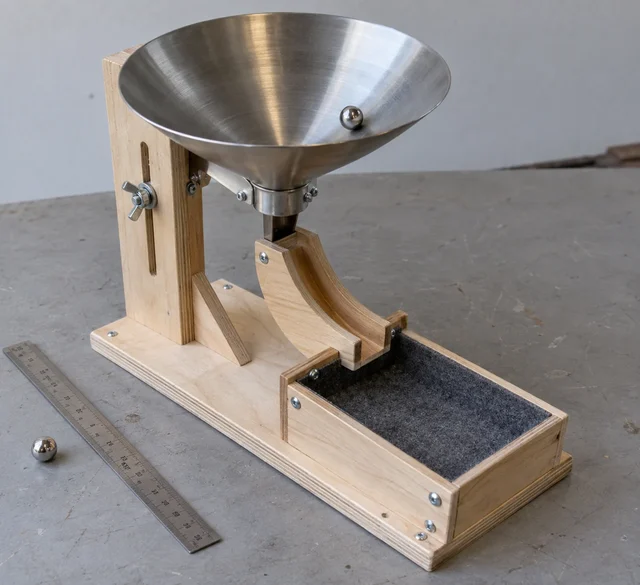
A marble can spend an entertaining few seconds circling a bowl, then meet the next track section at an angle that ruins the whole performance. This rig concentrates on that handoff: a removable funnel, one short open chute, and a catch tray large enough to keep the experiment on the table.
Build the landing before the launch
Secure the supports and check that the funnel outlet clears the chosen marble. Remove sharp edges. Keep the first drop modest and avoid springs, motors, or anything that launches the ball. Gravity provides enough variables.
Put the catch tray in place before testing. Retrieving marbles from under furniture is not useful data. Small balls are unsuitable for young children; keep them away from children and pets, and account for them when the session ends.
An open chute is useful because a stalled ball remains visible and reachable. A beautiful enclosed tunnel can come later, once there is a reason to accept the recovery problem it creates.
Give the rig one adjustment at a time
A slotted support can make height changes repeatable. Mark several positions and tighten the support securely before each run. Keep fingers away from the moving ball and do not adjust the rig while a run is in progress.
First keep the same marble, release position, funnel orientation, and chute angle. Observe where the ball enters the chute and where it stops. Try several ordinary releases before looking for a spectacular one.
Then change the height by one marked step. Do not change the angle as well. If the landing improves, return to the earlier height and check that the difference returns too. The point is to make an adjustment understandable, not merely to find one arrangement that happens to work once.
The quiet modification is still a modification
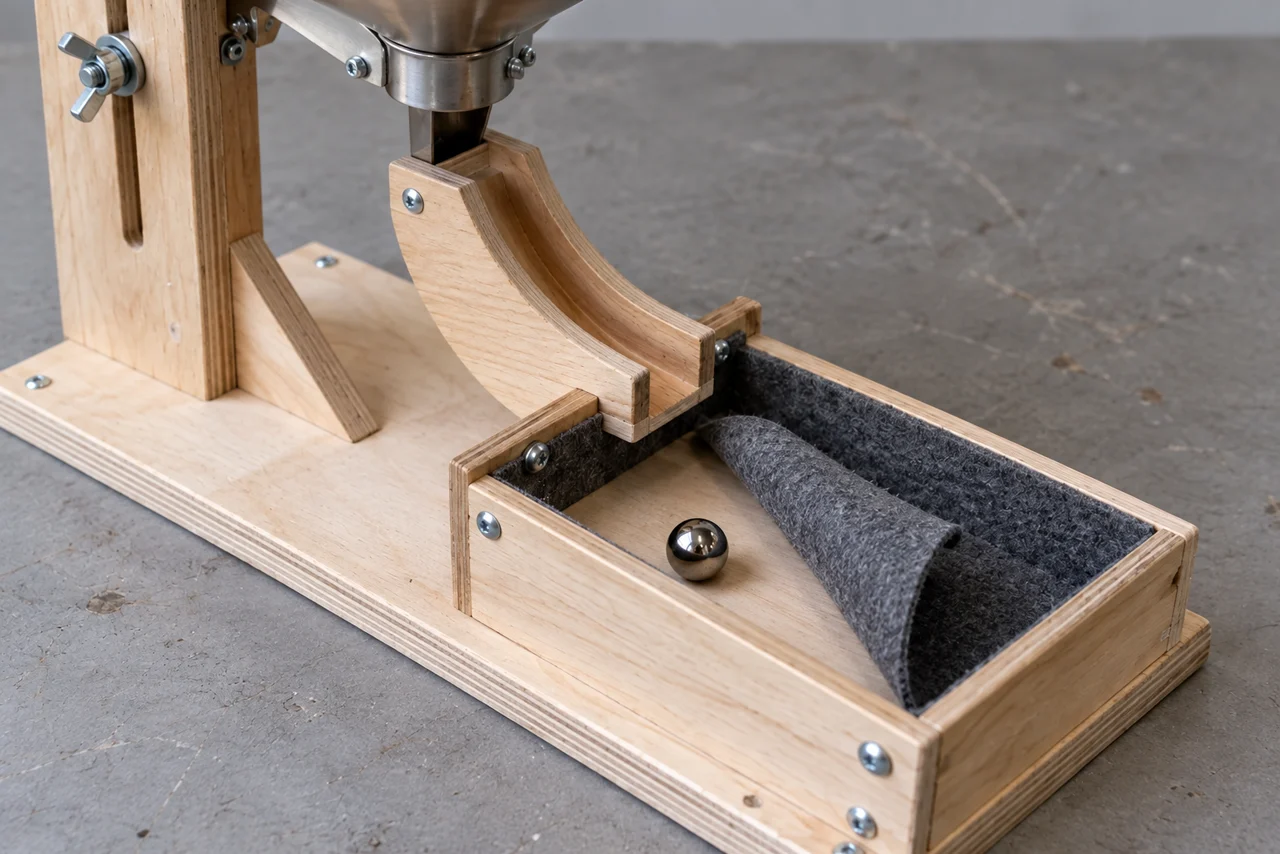
A felt liner makes the catch tray more pleasant to listen to. It also changes how the ball slows and where it stops. Test the bare tray first, then the liner, keeping the rest of the rig unchanged.
Watch for a liner edge that catches the ball. A little ridge can become the dominant feature of a small experiment. Secure the material so it cannot creep into the chute outlet between runs.
The same applies to tape, a replacement marble, or an extra support under the base. They may look like housekeeping, but they can change the result. Put them in the notes.
Make a jam uneventful
After ordinary runs behave, inspect the likely stalls: a slow entry, an off-center release, or two balls too close together. Do not create a jam by putting a hand into the moving mechanism. Stop, retrieve the ball safely, and see whether access requires moving the supports.
The removable funnel should come away without erasing every setting. A mark across the mount can help return it to the same orientation. Keep a simple setup photograph beside the notes so the recovery procedure does not become an exercise in memory.
A repeatable, slightly dull run is a useful achievement. Once the handoff behaves, connect the next section. There is plenty of time to make the entire contraption ridiculous later.
Materials
- Removable funnel
- Short open track sections
- One consistent ball size
- Catch tray and stable supports
Build Steps
- 1
Start with one transition
Test only the funnel outlet and first track section.
- 2
Keep recovery access
Make the funnel removable without shifting the supports.
- 3
Test stalls deliberately
Check slow entries and closely spaced balls over a catch tray.
Keep exploring
Chainlink is a free daily word-chain puzzle from Donuts or Else Games. Drag tiles to build chains where every word unlocks the next — Fire → Alarm → Clock → Tower.
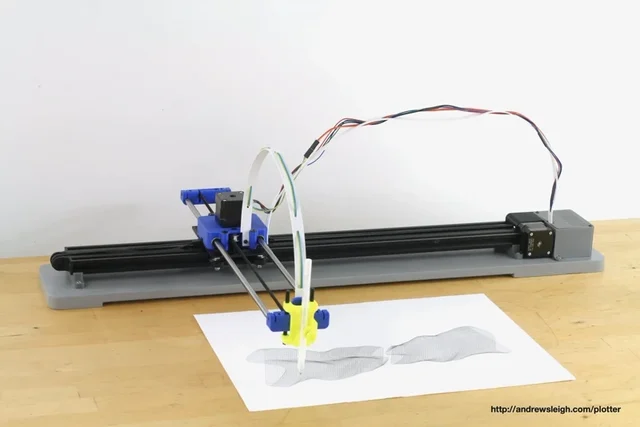
Andrew Sleigh's complete plotter writeup, with three design generations, original machine photos, parts lists and the SVG-to-G-code workflow.
Image credit
photos/v3/IMG_6608.jpg
Andrew Sleigh · MITResized without cropping and converted to WebP for the project card.
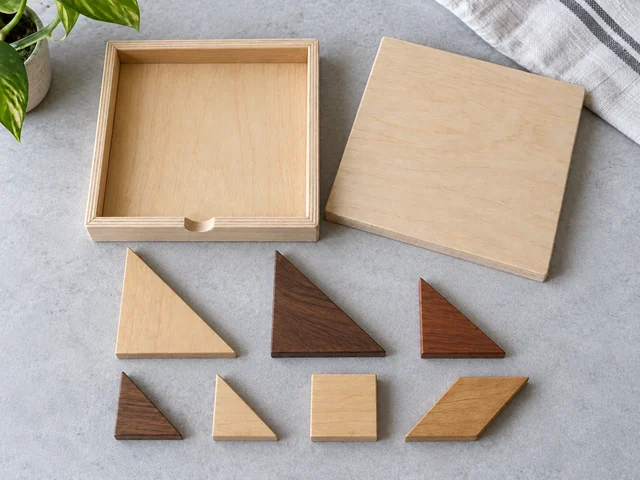
A seven-piece puzzle tray concept with a visible reset state and enough finger room to pick up every piece.
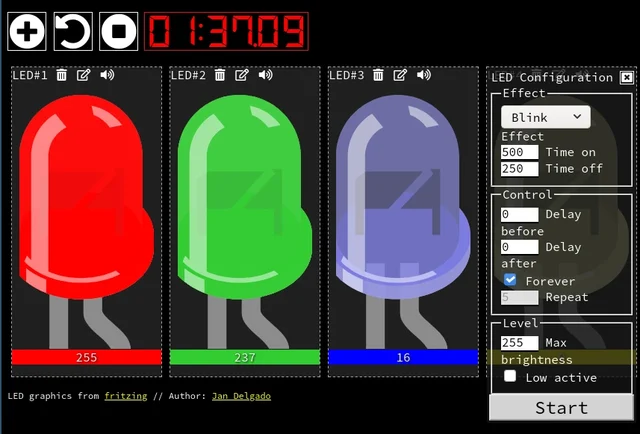
A responsive fade is a timing problem, not a processor contest. JLed and Arduino examples show how to animate light while the rest of a small interface keeps working.
Image credit
doc/jled-wasm.png
Jan Delgado; graphics created with Fritzing · MIT + Fritzing CC BY-SA 3.0Resized without cropping and converted to a WebP reading preview. Full-resolution original remains available.