A tangram tray that tells you when a piece is missing
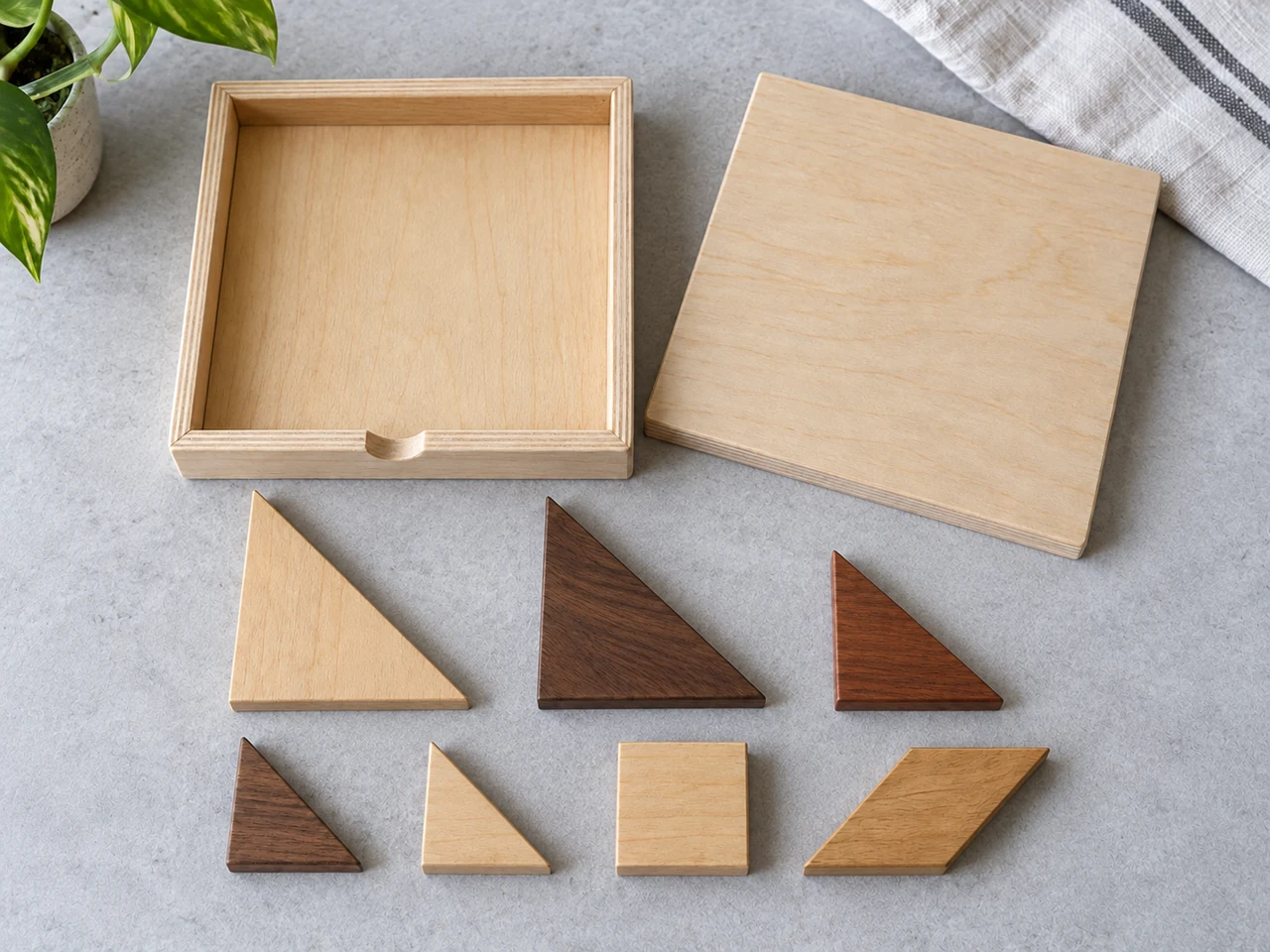
A seven-piece puzzle tray concept with a visible reset state and enough finger room to pick up every piece.
The puzzle should be difficult. Putting it away should not be.
Start with a cardboard tangram made from a verified seven-piece template. There should be two large triangles, one medium triangle, two small triangles, a square and a parallelogram. Check the geometry before committing to wood.
Design the last thirty seconds
Give the pieces a shallow tray and a clear home arrangement. A missing piece should leave an obvious gap. Add enough clearance or a finger recess that every piece can be lifted without tipping the whole tray over.
Try a removable liner before carving a complicated recess. It can help lift the pieces and is easy to replace when the arrangement changes.
Keep the challenge silhouettes separate from their solutions. Then ask someone to put the set away, not just solve a puzzle with it. Watch where the reset becomes fiddly.
Small pieces are unsuitable for young children; this design has not been assessed as a children's toy.
A pleasant reset is part of the game. It is also the part most likely to make the next game happen.
Materials
- Verified seven-piece tangram template
- Cardboard prototype material
- Shallow tray and optional removable liner
- Separate challenge and solution sheets
Build Steps
- 1
Verify the geometry
Check a cardboard set before transferring it to other materials.
- 2
Add finger clearance
Make every piece removable without tipping the tray.
- 3
Test the reset
Check that a missing piece is obvious in the storage arrangement.