Bench Notes / a practical reading path
Trust your measurements
A number on a screen is only the end of the measurement chain. Movement, light, placement, and the comparison method can change what that number means. Work through one variable at a time and keep enough notes to repeat the setup later. These are reading paths through documented projects and proposed experiments, not claims that Meteor Makers independently built or tested them.
Work through the path
01 Remove motion from the comparison
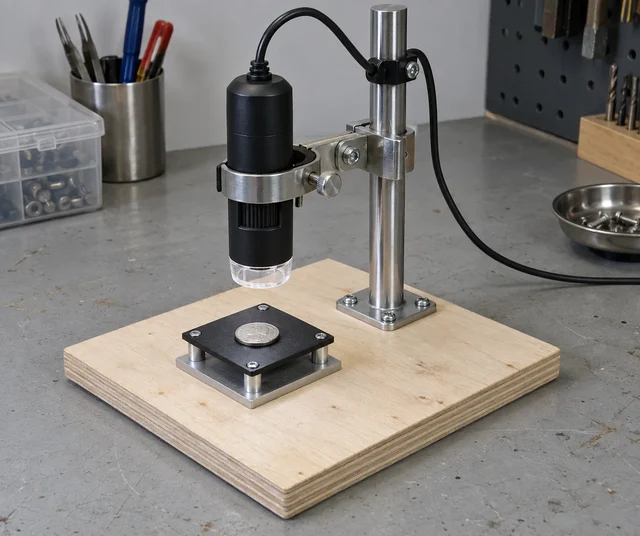
Begin with a stationary subject and fixed illumination. Compare the same view before and after changing the stand. A sharper frame alone is not evidence of improved optical resolution.
Setup check: Record the subject, magnification setting, lighting, and what changed in the support.
02 Keep the geometry fixed
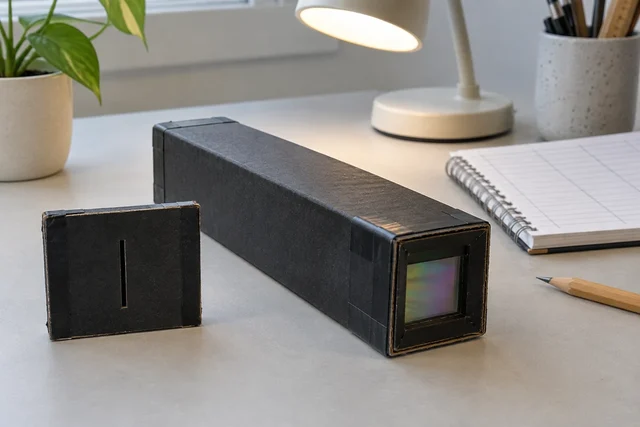
Read the slit and grating setup before comparing ordinary lamps. Keep the source position and camera settings consistent. Never point the instrument at the sun or a laser.
Setup check: Can you return to the same slit, camera, and source positions without guessing?
03 Compare against a reference
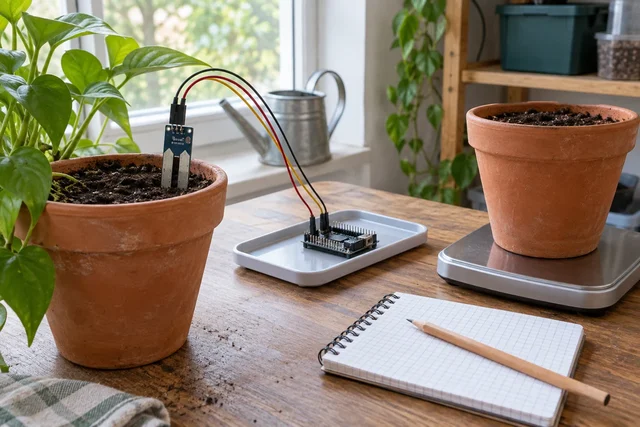
A raw soil-sensor value is not a universal moisture percentage. Follow the controlled-pot comparison and keep soil type and sensor placement visible in the notes.
Setup check: Write down the reference condition, units, repeat readings, and the limits of the comparison.
Make it repeatable
Keep an observation log.
Record the setup, reference condition, changed variable, units, and repeat readings. A blank, headings-only CSV for your next experiment.