
Agentic AI for Robot Teams: Revolutionizing Collaboration

Researchers advance agentic AI to improve autonomy, coordination, and adaptability in robotic teams, boosting efficiency and productivity across industries.
A New Era of Autonomous Collaboration
Imagine a factory floor where robots work together seamlessly, adapting to changing circumstances without human intervention. This vision is becoming a reality thanks to the advancement of agentic AI for collaborative robotic teams by researchers at the Johns Hopkins Applied Physics Laboratory.
Agentic AI enables autonomy, coordination, and adaptability in robotic teams, allowing them to operate with unprecedented efficiency and productivity. By leveraging this technology, industries such as manufacturing, logistics, and healthcare can reap significant benefits. For instance, robot teams can optimize workflows, reduce costs, and improve patient care.
The Science Behind Agentic AI
Agentic AI is a type of artificial intelligence that enables robots to make decisions and take actions independently. This technology has the potential to transform various fields by improving collaboration among heterogeneous systems. Researchers are pushing the boundaries of agentic AI to create more sophisticated and adaptable robot teams.
Challenges and Opportunities
While agentic AI holds tremendous promise, it also presents challenges. Integrating this technology into existing infrastructure can be complex, requiring significant investment in hardware and software upgrades. Moreover, ensuring that robots work safely and effectively together is a critical concern. Nevertheless, the potential benefits of agentic AI make it an exciting area of research and development.
Real-World Applications
The implications of agentic AI for industries like manufacturing and logistics are particularly significant. By optimizing workflows and reducing manual labor, companies can increase productivity and reduce costs. In healthcare, robot teams can assist with tasks such as patient care and medical research, improving outcomes and saving lives.
As researchers continue to advance agentic AI, we can expect to see more sophisticated and autonomous robotic teams in various sectors. This technology has the potential to revolutionize industries and improve our daily lives. As we move forward, it's essential to address the challenges associated with agentic AI while harnessing its benefits for a better future.
Keep exploring
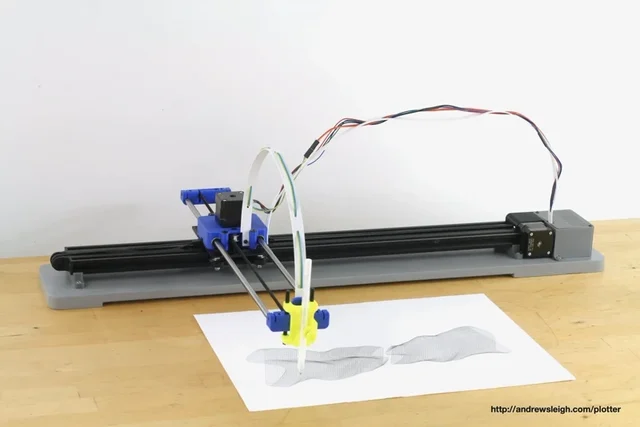
Andrew Sleigh's complete plotter writeup, with three design generations, original machine photos, parts lists and the SVG-to-G-code workflow.
Image credit
photos/v3/IMG_6608.jpg
Andrew Sleigh · MITResized without cropping and converted to WebP for the project card.
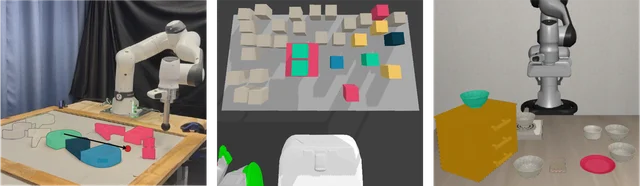
LENS uses a vision-language model to prune or merge scene objects before robot planning, cutting runtimes and recovering success in cluttered tests.
Image credit
LENS: Figure 1
Aileen Liao, Rachel Holladay, Dinesh Jayaraman, and Michael Posa · CC BY 4.0Figure extracted from the paper; composition unchanged.

A preclinical soft robot combines pneumatic steering, alternating anchors and kirigami sleeves. Its animal tests show useful tools, not an autonomous device ready for patients.
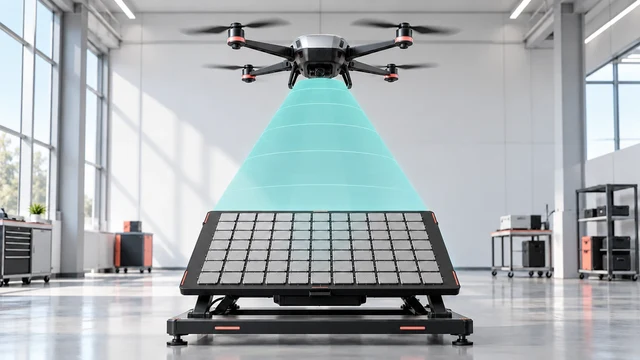
Reach reports a ten-hour flight using RF power beaming and automatic recharge decisions. The demonstration's dates, battery comparison and missing measurements matter.
Comments
Member comments are temporarily unavailable.
Log in to join the discussion.