Meta's Smart Glasses Put Intimate Footage in Front of Human Reviewers
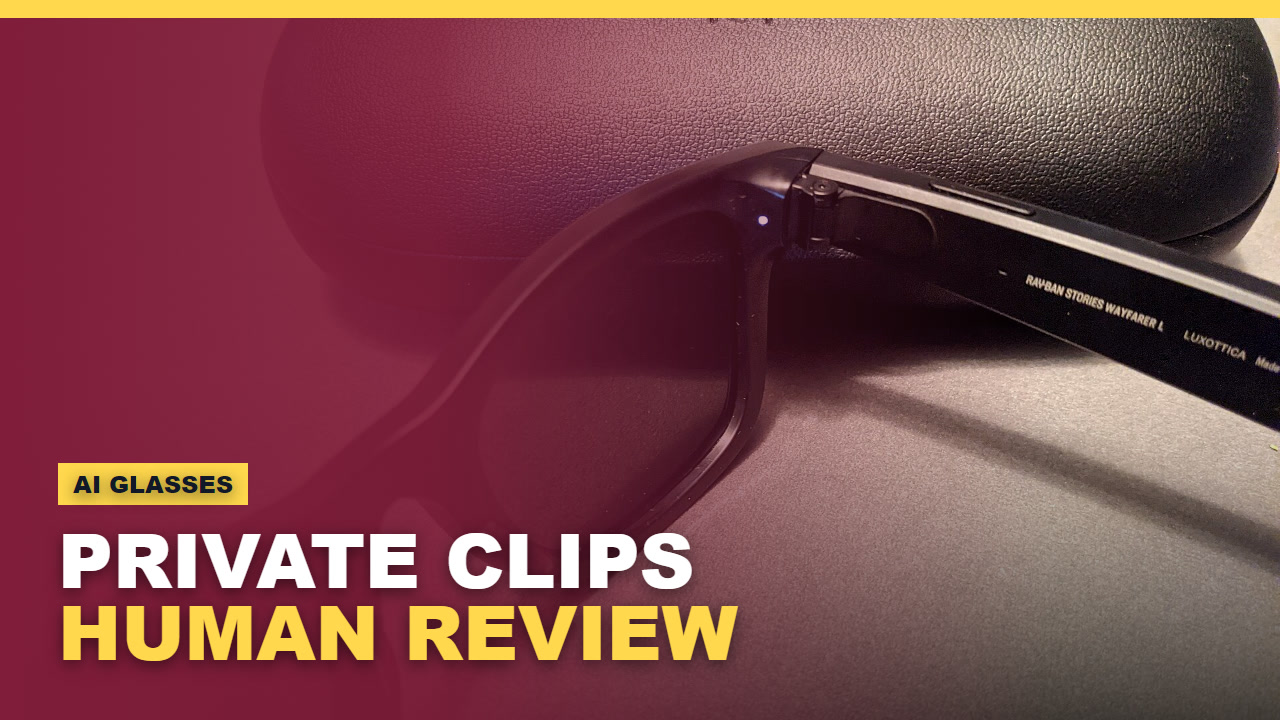
Swedish reporting found that contractors reviewing data tied to Meta AI smart glasses saw bathrooms, nudity, intimate moments, and bank-card details.
The sharpest version of the Meta smart-glasses story is not that every pair of Ray-Bans is a live feed to an office somewhere. It is narrower, stranger, and more important: when footage from Meta's AI glasses enters the company's AI review pipeline, some of it can land in front of human contractors who never appear in the product demo.
That is what makes the reporting durable. The scandal is not only about one set of disturbing clips. It is about the hidden path between a camera on someone's face, a cloud AI feature, and a worker asked to label what the camera saw.
What the investigation found
Svenska Dagbladet and Goteborgs-Posten reported in February 2026 that contractors in Nairobi reviewing data connected to Meta's AI smart glasses had seen highly sensitive material. The Verge later summarized the investigation in English, reporting that reviewers described bathroom visits, naked people, intimate moments, and bank-card details appearing in the footage they handled.
Those workers were not random viewers. They were part of the data-annotation labor force that helps AI systems learn what images, speech, and scenes mean. In practice, that can mean watching snippets from consumer devices and assigning labels, checking transcripts, or judging whether the AI understood what a user asked it to analyze.
The uncomfortable part is that smart glasses are not a phone camera you pull out for a single shot. They sit on a person's face. They point where the wearer points. They can capture other people who may not know the device is recording, much less that a clip might later be reviewed by a contractor in another country.
The precise version matters
Meta told The Verge that media captured by its glasses stays on the user's device unless the user chooses to share it with other people or with Meta. The company also said that, when people share content with Meta AI, contractors sometimes review that data to improve the experience, and that Meta uses filtering steps intended to protect privacy.
That distinction matters. A truthful version of the story should not claim that Meta employees are passively watching every wearer through the glasses by default. The defensible claim is that contractors reviewing content shared into Meta's AI systems reported seeing sexual, nude, bathroom, financial, and other private footage.
That is still a major privacy story. For the person being recorded, the difference between "a model processed this" and "a stranger reviewed this" is not a technical footnote. It changes the social contract around wearable cameras.
Why it still matters later
The shelf life here is longer than the immediate outrage cycle because the product category is still young. Smart glasses are being marketed as assistants, cameras, translators, memory aids, and eventually everyday computing devices. The more useful they become, the more often they will be pointed at ordinary life.
The Verge reported that EssilorLuxottica sold more than 7 million AI-powered Ray-Ban glasses in 2025. That scale turns a weird gadget problem into an infrastructure problem. A wearable camera used by millions can collect sensitive context from kitchens, cars, offices, classrooms, hospitals, and bedrooms. Even if only a small slice of that material is shared to an AI feature, the review pipeline has to be built for the most private edge cases, not the clean marketing examples.
It also exposes the labor behind AI. The public-facing magic is a person asking glasses what they are seeing. Beneath that is a workforce making judgment calls about scenes, faces, documents, and speech. When those workers say they saw things users likely did not expect them to see, the story becomes less about one company's bad optics and more about how consumer AI is made.
The line to watch
The key question is consent. Did the wearer understand when a clip could leave the device? Did the people around the wearer have any meaningful warning? Did the review system reliably filter faces, nudity, financial details, and medical information before a person saw them?
Those are not abstract policy questions. They are product-design questions. If AI glasses are going to move from novelty to normal, they need rules that account for everyone in the frame, not only the person wearing the hardware.
The scandal is real, but the careful wording is the story's strength. Meta's glasses did not reveal a single cartoonish surveillance switch. They revealed a chain of decisions: capture, share, review, label, train. That chain is where the future of wearable AI will either earn trust or lose it.
Comments
Member comments are temporarily unavailable.
Log in to join the discussion.