Mobile Fortify Is the Face-Recognition App Already in the Field
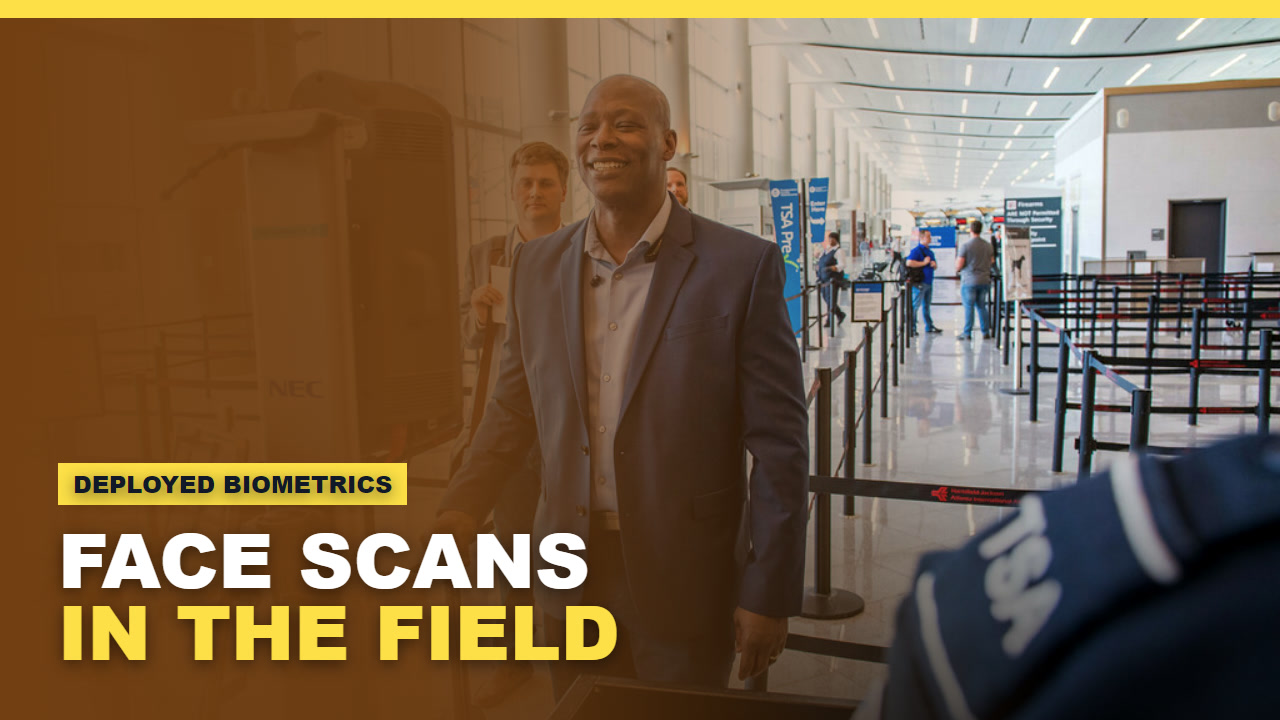
DHS lists Mobile Fortify as a deployed high-impact AI use case for ICE, capable of capturing faces, fingerprints, and identity documents in the field.
Some surveillance stories are frightening because they sound futuristic. Mobile Fortify is frightening because it is already listed as deployed.
In the Department of Homeland Security's AI Use Case Inventory, Immigration and Customs Enforcement describes Mobile Fortify as a mobile tool that helps officers and agents identify people in the field. WIRED reported in early 2026 that DHS's inventory also disclosed the vendor behind the app and showed that both ICE and Customs and Border Protection had moved it into deployment.
This is not a lab demo or a leaked slide deck. It is a named federal system, attached to real field operations, using face recognition and other biometric matching techniques.
What DHS says the app does
The DHS inventory entry says Mobile Fortify runs on a mobile device and can capture facial images, contactless fingerprints, and photos of identity documents. That data is transmitted to CBP for submission to government biometric matching systems, which use AI-based techniques including facial recognition and fingerprint matching. The returned result can include possible matches and biographic information.
ICE describes the app as an information-gathering and matching assistant. DHS says the tool does not make identity or enforcement decisions on its own, and that officers remain responsible for confirming identity and deciding what action to take.
Those safeguards are important, but they do not erase the core shift: biometric checks that once required fixed infrastructure can move into a phone-based field workflow.
Why deployment matters more than theory
WIRED reported that Mobile Fortify was listed as operational for CBP at the beginning of May 2025, while ICE received access on May 20, 2025. The same report said the inventory identified NEC as the vendor behind the CBP app, with ICE saying the tool was developed partly in house.
The date matters because governance often arrives after deployment. DHS labels Mobile Fortify as high impact. In the ICE inventory entry, identification of potential impacts is still described as in progress. WIRED reported that ICE was still developing some monitoring protocols and an appeals process even though the tool was already deployed.
That is the long-term issue. Once a biometric system is in the field, the public debate is no longer about whether to build it. It is about how to govern a tool already sitting in officers' hands.
The citizen problem
Mobile Fortify is framed around immigration enforcement, authorized investigations, and victim identification. But WIRED reported that the tool can be used on undocumented immigrants and U.S. citizens alike. That broad reach changes the privacy stakes.
A face-recognition scan is not a normal ID check. It can connect a person standing in front of an officer to databases, prior records, travel systems, and other government holdings. Even when the match is only advisory, a bad match can create immediate real-world consequences: detention, further questioning, lost travel privileges, or pressure to prove who you are.
The DHS inventory emphasizes human control. That is necessary. But human review is only as good as the procedures, training, appeal rights, audit trails, and error reporting around it. A fast field tool can encourage fast decisions, especially in tense encounters where the person being scanned has little leverage to object.
The bigger pattern
Mobile Fortify belongs beside the smart-glasses stories because all three are about the same drift: cameras becoming identity infrastructure.
Consumer eyewear raises the possibility that strangers can be recognized by people wearing connected devices. Government field apps raise the possibility that officers can run biometric checks wherever they are. In both cases, the important question is not whether the camera works. It is who gets to point it, what happens to the data, and how a person can challenge the result.
The most durable takeaway is that surveillance no longer needs to look like a control room. It can look like glasses. It can look like a phone. It can look like a routine stop where the most important decision is made by a system most people have never heard of.
Comments
Member comments are temporarily unavailable.
Log in to join the discussion.