
The Mars Dust That Won't Shake Off: Perseverance Finds a Tiny Spacesuit Problem
Published October 27, 2026
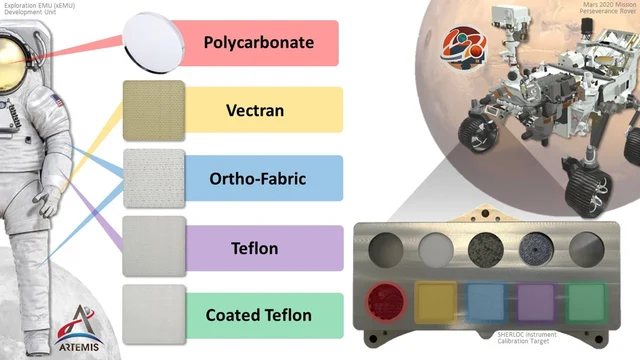
Archival 2020 NASA graphic: a prototype-suit illustration and the materials sent to Mars, not a new photograph or a qualified Mars spacesuit. Credit: NASA.
Image credit
Spacesuit materials on the SHERLOC calibration target
NASA · NASA factual editorial useResized and encoded as WebP; no semantic alteration.
Dust down to roughly 100-300 nanometres clings to Perseverance's calibration materials. The new measurements could help engineers design cleaner suits and habitats.
Mars has a housekeeping problem that a brush may not solve. Dust can cling to a spacesuit after the obvious dirt has shaken loose, and the residue can be much smaller than a rover camera could show as individual grains.
On October 26, NASA reported new Perseverance measurements of fine and ultrafine particles on materials carried aboard the rover. The study follows 1,645 Martian days of exposure. Some deposits include particles down to roughly 100 to 300 nanometres, making this a question about what sticks to a surface, not just how dusty Mars looks.
The clever part is where the measurements came from: hardware meant to help the rover check its own instruments.
1. Start With a Known Surface
Perseverance carries calibration targets with materials whose properties scientists already understand. These provide reference points for interpreting the rover's observations. One target belongs to PIXL, its X-ray instrument for investigating the elemental composition of rocks. Another belongs to SHERLOC, which investigates minerals and organic compounds.
PIXL's target includes Teflon. NASA explains that the instrument cannot directly detect the elements in that material, so an elemental signal from the surface provides information about the dust sitting on it instead. A reference target becomes an opportunistic experiment.
The SHERLOC target was also designed with future astronauts in mind. NASA's original 2020 description identifies the first spacesuit materials sent to Mars. Those samples were meant to reveal how materials endured the surface environment. They were not miniature complete suits: a material swatch cannot reproduce every seam, seal, bend or cleaning cycle of something a person would wear.
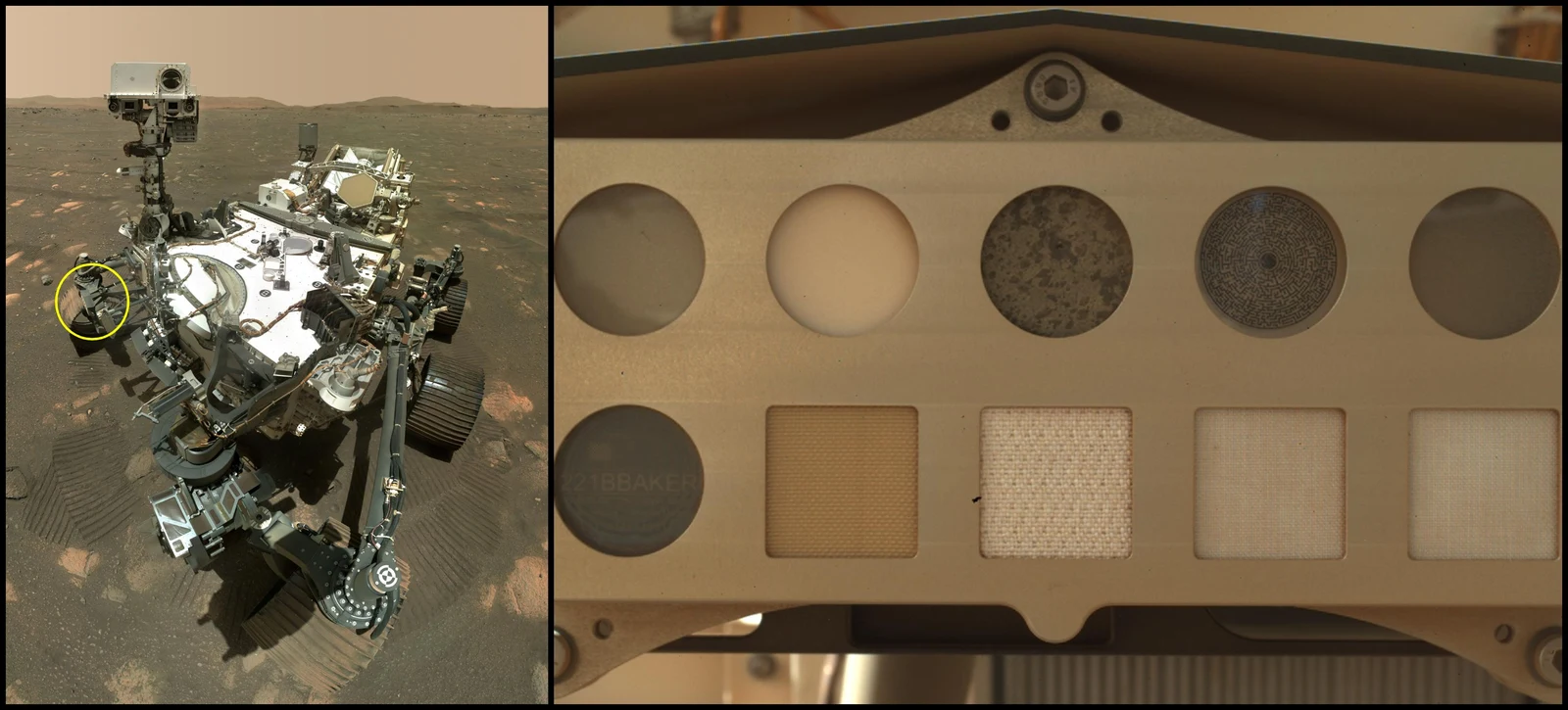
Image credit
Perseverance and SHERLOC calibration target
NASA/JPL-Caltech · NASA factual editorial useResized and encoded as WebP; no semantic alteration.
Annotated composite published with NASA's report. The target holds material samples; individual nanometre-scale grains are not resolved here. Credit: NASA/JPL-Caltech.
2. Ask What Remains After the Dust Moves
Different surfaces retained different particle sizes. NASA reports an average of about two micrometres on PIXL's Teflon target and SHERLOC's Vectran swatch. The smaller, roughly 100-to-300-nanometre particles appeared on PIXL's basaltic glass and SHERLOC's Teflon.
That variation is more useful than a single headline number. It suggests that choosing a surface changes the residue an engineer has to manage. Static electricity appears to help sort the grains, and the smallest particles remained attached through years of rover activity.
There is an important measurement distinction here. Detecting dust on a calibration target is not the same as measuring airborne concentrations around an astronaut. Nor does it establish how much dust would pass through an airlock, become suspended inside a habitat or reach a person's lungs. Those are further questions, not results to quietly insert into this study.
3. Design Around the Residue, Not the Photograph
The engineering implication is straightforward: a surface that looks cleaner is not necessarily clear of the smallest particles. A useful cleaning test would compare what was deposited with what remains, including the fraction too small to judge by eye. That is a test-design inference, not a cleaning method Perseverance has already validated.
Future suits and habitats need more than a promising fabric. They need ways to limit transfer between the outside environment and living space, and evidence that those methods keep working after repeated use. Material selection, protective coatings and the airlock arrangement all belong in that discussion.
This is not an announcement that NASA has made a dust-proof Mars suit. It is a particularly economical way to get better design inputs: leave well-characterized materials on a robot already working on Mars, then use the instruments already there to investigate what the environment leaves behind.
Which part would you tackle first: a less dust-retentive surface, a cleaning tool, or the transition into the habitat? Share your reasoning in the comments below.
Keep exploring
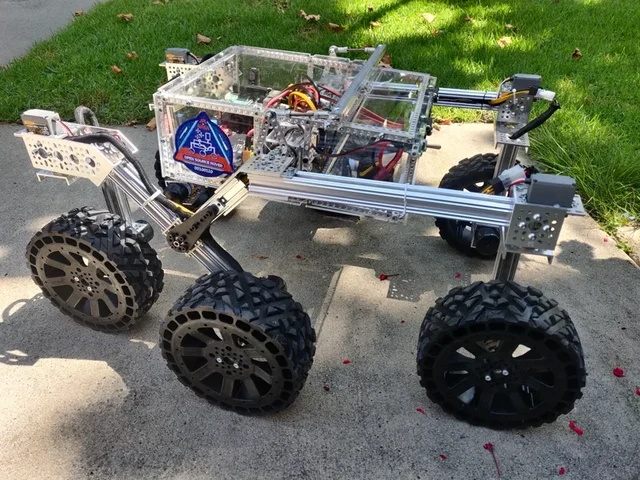
The complete reviewed JPL rover hardware manual: parts lists, wiring, PCB assembly, mechanical chapters, original build photographs and diagrams, optional mast, and downloadable schematics.
Image credit
images/osr-side-outside.jpg
JPL / California Institute of Technology and Open Source Rover contributors · Apache-2.0Resized without cropping and converted to WebP for the project card.
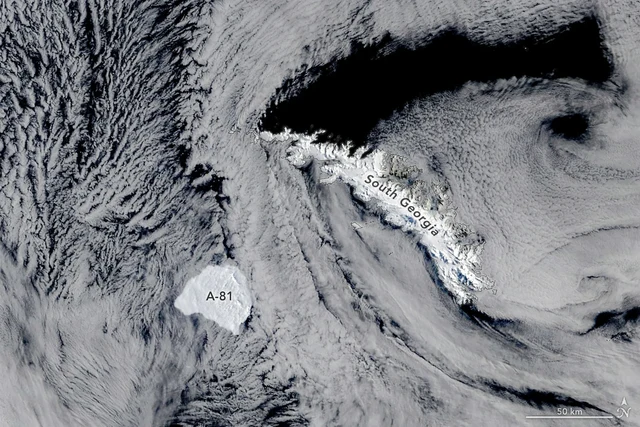
NASA's new view follows A-81 to the edge of South Georgia's underwater shelf. The iceberg is slowing after a journey that began at Antarctica's Brunt Ice Shelf.
Image credit
A-81 near South Georgia on October 20, 2026
NASA Earth Observatory/Michala Garrison; MODIS data from NASA EOSDIS LANCE and GIBS/Worldview · NASA factual editorial useResized and encoded as WebP; no semantic alteration.
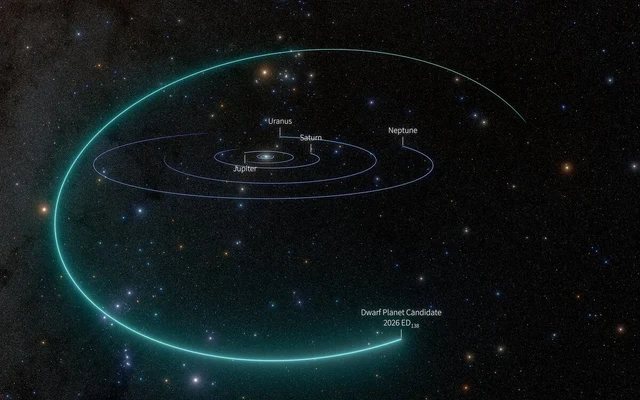
Repeated Rubin images and a decade of recovered observations revealed 2026 ED138 beyond Pluto. Its estimated size is impressive, but dwarf-planet status remains unconfirmed.
Image credit
2026 ED138 orbital model
NSF-DOE Vera C. Rubin Observatory/NOIRLab/SLAC/AURA/R. Proctor; image processing M. Zamani (NSF NOIRLab); orbit data IAU Minor Planet Center (MPCorb), funded by NASA PDCO and Tamkin Foundation; star map NASA/Goddard SVS; Gaia DR2 ESA/Gaia/DPAC · CC BY 4.0Cropped orbital model to focus on the labeled candidate and orbit; resized and encoded as WebP. Model shows its May 8, 2026 position, not a resolved photograph.

Four spectral peaks reveal two gas rings around white dwarf J1328-1450. Surviving bodies could help maintain the structure, but those bodies have not been directly seen.
Image credit
J1328-1450 proposed system artist impression
ESO/L. Calçada · CC BY 4.0Resized and encoded as WebP; no semantic alteration.
Comments
Member comments are temporarily unavailable.
Log in to join the discussion.