A Maker Built Rocky With a Pi, Seven Servos, and AI
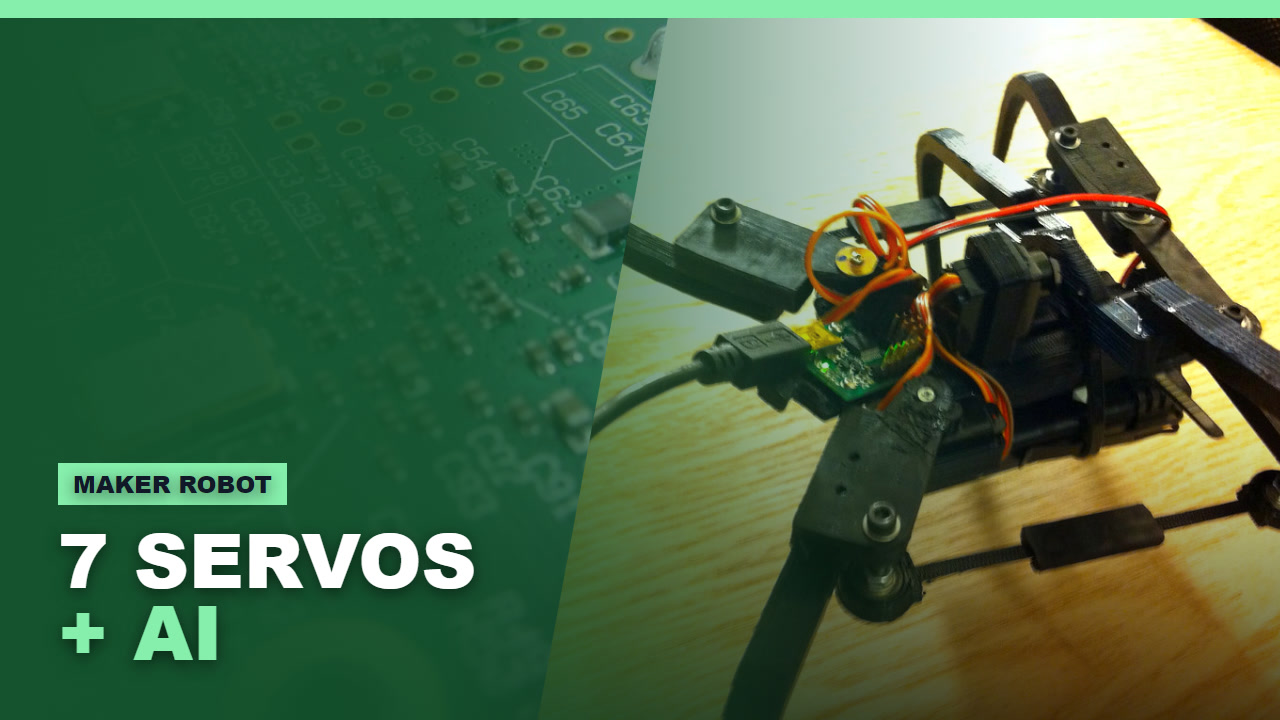
Leviathan Engineer built a talking, moving Rocky-inspired robot with a Raspberry Pi 5, seven servos, speech recognition, and generated replies.
Leviathan Engineer did not stop at printing a recognizable prop from Project Hail Mary. The maker built a Rocky-inspired robot that can listen, answer in character, move seven legs, and respond to requests that were not individually scripted in advance.
The project, featured by Raspberry Pi on July 6, 2026, combines familiar maker hardware with a newer programming workflow. A Raspberry Pi 5 runs the interaction, a servo controller handles the motion, and AI tools connect spoken commands to replies and actions.
The hardware starts with seven moving legs
The build uses a 4GB Raspberry Pi 5 and a PCA9685 servo-driver HAT. Seven servos move the legs, while an internal microphone and speaker let the robot hear and answer the person in front of it.
The servos require their own additional power supply. That is a small but important detail in a project like this: a Raspberry Pi can coordinate several motors, but asking its own power system to drive seven servos directly would be unreliable.
The body was 3D printed in multicolor filament. Instead of orienting every part for the fastest or easiest print, the maker arranged the body and legs so the filament changes would create horizontal color gradients. The visual goal therefore shaped the slicing strategy and made the print more difficult.
Conversation is tied to action
The maker installed Claude Code on the Raspberry Pi to handle the programming workflow. The finished system recognizes speech, generates replies in Rocky's manner, and uses text-to-speech so the physical robot can answer aloud.
The key step is connecting conversation to movement. In the demonstration described by Raspberry Pi, a person asks for a fist bump and the robot responds even though that exact exchange was not preprogrammed as a fixed button press.
That does not mean the model has unrestricted control of the motors. A useful physical AI build still needs a defined set of actions, limits that protect the hardware, and code that turns higher-level intent into safe servo positions. The interesting part is that natural language can choose among those capabilities without requiring a separate voice command for every motion.
AI changes the shape of the maker project
Traditional interactive props often use branching scripts. The builder writes a list of phrases, matches a command, and plays the corresponding response. That approach is predictable but becomes brittle as the number of possible interactions grows.
A language model can handle variation in how people speak and generate a response that fits the scene. For a character robot, that flexibility creates the impression of personality with much less hand-authored dialogue.
It also introduces new engineering work. Generated language can be slow or unpredictable. Speech recognition can fail in a noisy room. Motor commands need stronger boundaries than text output. A convincing build depends on the conventional control layer being solid enough that the conversational layer cannot send the mechanism somewhere unsafe.
Fandom becomes a practical robotics brief
The recognizable character supplies a clear target for proportions, movement, color, and voice. That gives the project emotional momentum, but the underlying techniques are broadly reusable.
A museum creature, an educational robot, a convention prop, or an original desk companion could use the same structure: microphone input, a model that interprets speech, a controlled library of physical actions, and a voice that gives the machine character.
The Rocky build works because none of its ingredients has to carry the illusion alone. The print establishes the body, seven servos establish presence, the microphone and speaker establish a social loop, and the Pi coordinates the whole performance. AI supplies flexibility, but the maker still had to build everything that makes the answer move.
Comments
Member comments are temporarily unavailable.
Log in to join the discussion.