Hubble and Webb Found Tiny Icy Worlds That Keep Their Past
Published September 10, 2026
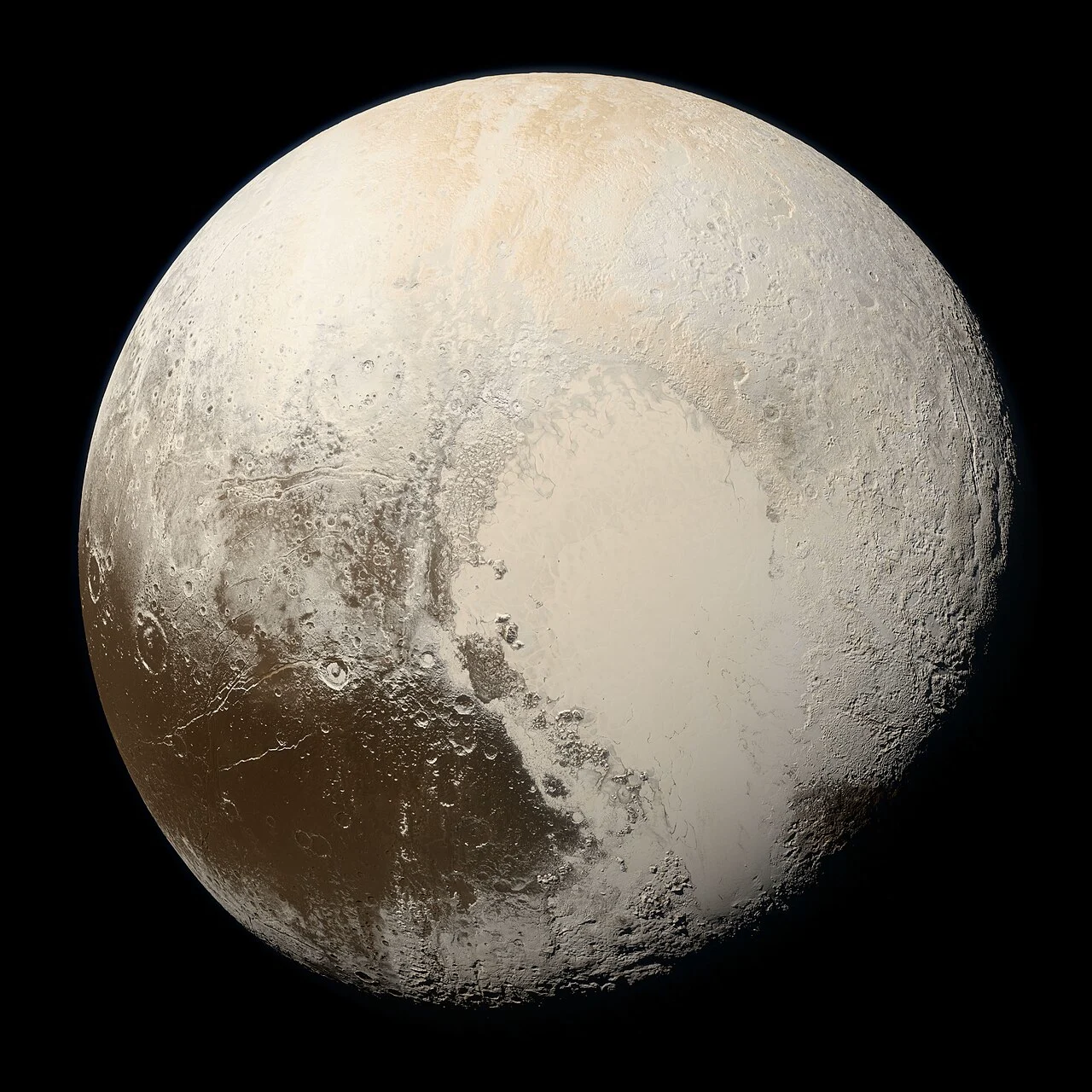
Pluto provides a familiar view of the outer solar system. The much smaller objects in this survey remain points of light.
A joint Hubble-Webb survey found 27 faint worlds beyond Neptune. Their colors and scarcity offer a fresh test of how planets get their building blocks.
Some of the solar system's smallest visible leftovers are refusing to tell the expected story. A joint Hubble and Webb survey found 27 faint objects beyond Neptune, and their colors resemble those of larger relatives more closely than researchers anticipated.
The discovery is a reminder that better measurements do not always add more of the same. Sometimes they expose a population that a theory expected to look different.
Small Objects, Large Questions
According to NASA's September 8 report, the smallest detected object is about five kilometers across. The survey also found fewer very small bodies than some formation models predicted.
Researchers studied dynamically cold and hot populations. Those labels describe orbital behavior, not whether one group feels warm. Despite their different histories, small members retain color relationships seen among larger objects. The team is investigating what this means for collisions and the preservation of early surface composition.
There is an important visual caveat: these objects appear as points of light in the observations. The detailed world at the top of this article is Pluto in a New Horizons image, not one of the newly detected five-kilometer objects. It offers context for the region, not a close-up of this survey's discoveries.
Two Instruments, One Better Question
Combining measurements is powerful when the instruments contribute different information. Repeating the same reading can improve confidence; observing through a different window can expose a limitation in what the first reading could tell you.
That distinction is worth borrowing for a maker project. A camera can show a motor turning, but a current measurement may reveal the extra load before motion visibly changes. A temperature reading can report an average while an image reveals where a hot spot sits. More sensors are not automatically better. Complementary sensors can be.
The harder part is keeping the observations comparable. Time stamps, calibration, and an honest account of what each instrument measures matter more than an impressive-looking dashboard. Otherwise it is easy to mistake disagreement between instruments for a discovery about the object itself.
The Missing Objects Matter Too
Our reading of this result is that the count deserves as much attention as the colorful illustration. A survey does not only ask what exists. It asks what was detectable, what was found, and how that compares with an expectation.
An apparent absence is not automatically a physical absence. Detection limits and selection effects have to be considered before turning a shortfall into an explanation. That is why population studies are more demanding than collecting examples that look interesting.
The durable lesson is to make room for results that do not arrive. If an experiment was designed to find a pattern, record the conditions under which the pattern failed to appear. Those runs may become the strongest constraint on your favorite idea.
Which result catches your attention more here: the similar colors or the shortage of tiny objects? Leave your reasoning in the comments below.
Comments
Member comments are temporarily unavailable.
Log in to join the discussion.